

How to Prepare Your Garden for Wildfire
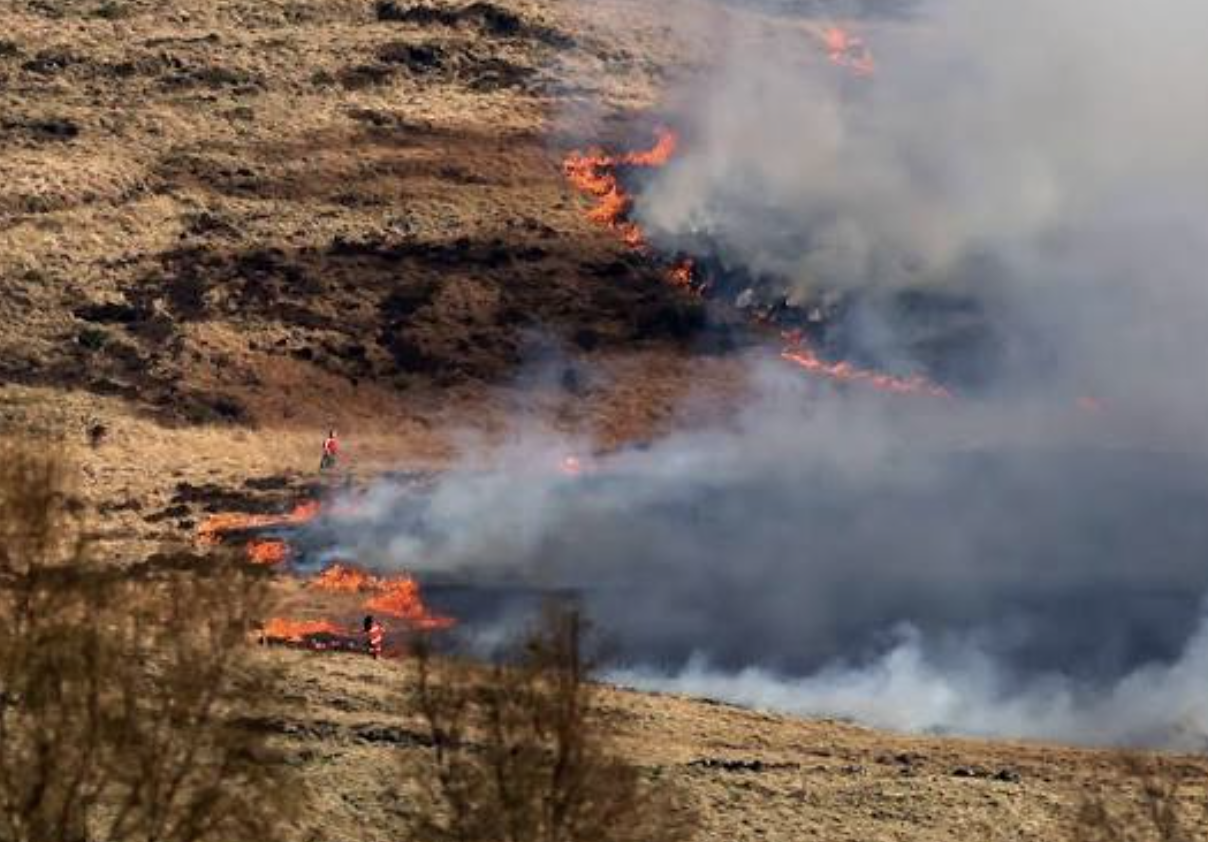
Manchester UK Moreland wildfire 2026
Wildfires in the UK are becoming an increasingly serious threat, particularly during prolonged periods of hot, dry weather. For gardeners living near woodland, heathland, moorland, grassland or other fire-prone landscapes, preparing your garden for wildfire is something that needs to happen long before smoke appears on the horizon. From reducing dry combustible material and creating fire breaks to choosing less flammable planting and storing rainwater, there are practical ways to design and manage a garden to reduce wildfire risk around your home.
For most British gardeners, wildfire preparedness probably hasn't historically featured very highly on the gardening calendar.
I think that needs to change. - Particularly for country and periurban residence.
Wildfire is becoming an increasingly visible part of British summers. Fires across grassland, heathland, moorland and woodland are no longer something we can simply view as a problem happening somewhere else. And where those landscapes meet our towns, villages and gardens, wildfire can become a threat to homes too.
Coming from Australia, the idea of preparing a property for fire feels considerably less foreign to me. It's something that has long been part of living and gardening in many fire-prone parts of the country.
And perhaps the most important lesson I've brought with me is this:
You don't prepare for a wildfire when you can see smoke on the horizon.
You prepare your garden months, and ultimately years, beforehand.
Before we go any further, though, I want to make something absolutely clear. No garden is worth your life. A well-prepared garden may help reduce the risk of fire reaching your home, but it cannot make a property fireproof. If the emergency services tell you to evacuate, leave. Do not remain behind because you've decided you're going to save your roses.
Your garden can grow back.
You can't.
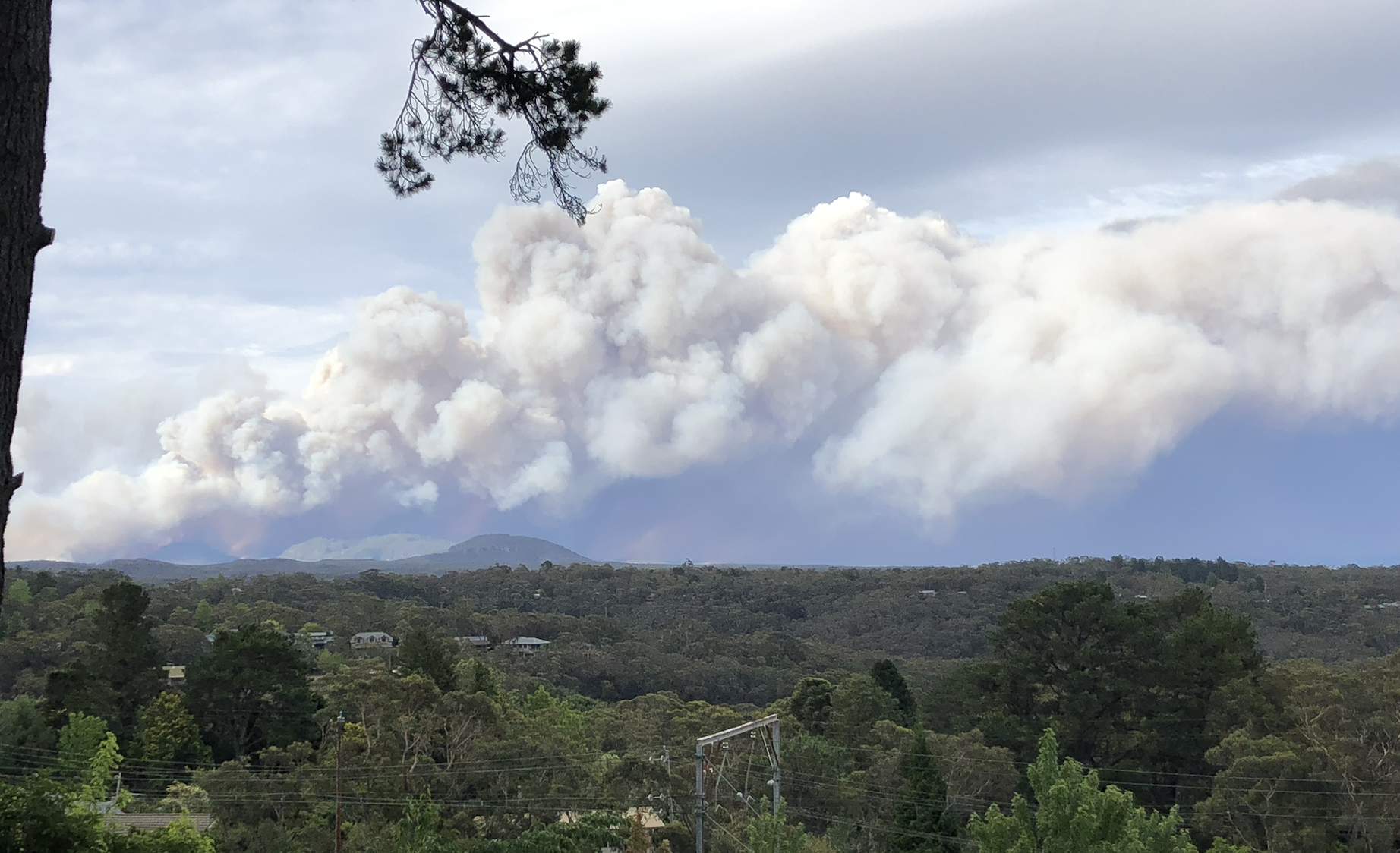
I lived with the threat of bushfires during Australia's devastating 2019–20 Black Summer. This photograph was taken from my home in the Blue Mountains, west of Sydney, and shows what is known as a pyrocumulonimbus - a huge thunderstorm generated by the intense heat of a fire. These storms can produce lightning and powerful, unpredictable winds, creating new ignitions and making an already dangerous fire even more extreme.
PART ONE: PREPARING YOUR GARDEN LONG BEFORE A FIRE
1. Keep your garden alive & thriving
Interestingly, creating a garden better able to withstand fire doesn't necessarily mean creating a barren landscape around your house.
It means managing the vegetation that's there.
READ: How to Keep Your Garden Alive During a Drought and Hosepipe Ban
Plants contain water, and their moisture content affects how readily they ignite. A healthy, hydrated plant presents a very different fire risk from the same plant when drought-stressed, surrounded by dead foliage and sitting above bone-dry leaf litter.
This is another reason why drought-resilient gardening matters.
Build healthy soil. Add organic matter. Mulch appropriately through the wetter parts of the year. Encourage plants to establish deep root systems. Capture rainfall and use it to keep important areas of the garden healthy during extended dry periods.
When soil and vegetation dry out through a prolonged British summer, the amount of readily combustible material within the landscape increases. If you can hold water in your soil thus keeping your plants lush you will have less combustible materials.
A resilient garden isn't just better equipped to survive drought.
It can also become part of your fire preparedness.
2. Get serious about storing water
I talked about this in my article on drought gardening, but wildfire gives Britain another reason to rethink the tiny water butt.
If your garden backs onto woodland, heathland, moorland, dry grassland, farmland or another large area of vegetation, having a substantial supply of stored rainwater is worth considering.
In Australia, 10,000-litre-plus rainwater tanks aren't unusual, and I think there is something Britain can learn from the scale at which water is captured there.
That doesn't mean every suburban British garden suddenly needs a 10,000-litre tank.
But if you have the space, why are we capturing 200 litres when thousands of litres fall onto our roofs over winter?
Stored rainwater can keep the garden alive during drought. It can support wildlife. And it gives you a water supply that isn't entirely dependent on turning on the mains tap during a summer when hosepipe restrictions may already be in place.
Increasing our rainwater storage is starting to look less like an environmental nice-to-have and more like sensible climate adaptation.

3. Design the garden to break up fire
This is where garden design comes into pay.
One of the most useful principles in fire-conscious garden design is breaking up fuel continuity.
Put simply: don't give fire an uninterrupted journey through your garden towards your house.
Imagine a continuous run of dry grass leading into a shrub border, which connects to a hedge, which meets a timber fence, which runs directly to the house.
You've essentially created a potential path of combustible material.
Now break that landscape apart.
Paths. Gravel. Paving. Lawns. Low-growing planting. Walls. Driveways. Water features. Areas of more widely spaced vegetation.
These elements create interruptions between potential fuels. The principle is already being applied in Britain on a larger scale: fire services encourage the creation of fire breaks in vulnerable landscapes by removing strips of dry vegetation so that a fire has less material through which to travel.
This doesn't mean turning your garden into a gravel car park.
It means thinking about where fire could travel when you're designing it.
And if your garden backs directly onto woodland, heath, common land or dry grassland, this becomes particularly important. Look at the boundary between your garden and that landscape. Is there any separation at all, or does combustible vegetation simply continue from one into the other?
4. Think about what you plant, but don't believe in “fireproof plants”
There are plants that are less readily flammable than others.
Generally, plants with fleshy, moisture-rich foliage and relatively little dead material can behave differently in fire from plants containing lots of dry, fine foliage, peeling bark, dead stems or highly resinous material.
This is where a plant like Agapanthus can come into play. Its dense, fleshy foliage is characteristic of the sort of high-moisture herbaceous planting that can be useful within a fire-conscious planting scheme. Better yet it is drought tolerant and won’t rely on consistent watering during a hosepipe ban or drought.
But I want to be careful with the terminology.
There is no such thing as a fireproof plant.
Under sufficiently severe conditions, all plants burn.
Rather than searching online for a magical list of "fire-resistant plants", look at their characteristics. How much dead material does the plant accumulate? How easily can you maintain it? Does it contain lots of fine, dry foliage? Is it going to drop large quantities of combustible material underneath itself? Does it remain fleshy and green through summer?
And just as importantly: where are you putting it?
A potentially more flammable plant growing well away from the house is a very different proposition from one pressed against a timber-clad wall.
Plant placement and spacing can matter as much as species selection.
5. Don't create a ladder for fire
We spend a lot of time in garden design thinking about layers.
Groundcovers become perennials. Perennials become shrubs. Shrubs sit beneath small trees. Small trees merge into the canopy.
Ecologically and aesthetically, it can be wonderful.
From a fire perspective, however, it can also create what's known as ladder fuel, vegetation that allows a surface fire to move progressively upwards into shrubs and eventually tree canopies and if that canopy is touching your home, its a ladder of fire putting your home at rise.
You don't necessarily need to remove your trees. - Do Not Remove The Trees.
Trees themselves aren't automatically the enemy. Appropriately positioned trees provide shade, shelter and habitat, and removing mature vegetation indiscriminately isn't the answer to wildfire preparedness.
The important thing is separation.
Prune lower branches where appropriate. Avoid dense masses of dry vegetation directly beneath tree or canopies in particularly vulnerable parts of the garden. Remove accumulated dead material.
Think less about eliminating vegetation and more about breaking the connections between fuels.
6. Create a defendable space around the house
The closer you get to the house, the more disciplined the garden should become.
You don't necessarily need a barren ring around your home, but combustible material immediately against the building is an unnecessary risk.
That means thinking about more than plants.
Timber furniture. Firewood. Wooden planters. Doormats. Garden waste. Dry mulch. Sheds. Fences. Gas bottles. Compost heaps. Dead leaves accumulating behind pots or underneath decking.
During an ember attack, any of those things could potentially become the point where a fire establishes itself beside the house.
Here's a useful little trick: look at where leaves naturally gather around your garden. Wind tends to push lightweight material into particular corners, against fences, beneath decking and around buildings — and these can also be places where windborne embers may collect. It's not an exact science, but those little piles of leaves can give you a clue to some of the spots worth keeping particularly clear during periods of high fire risk.
UK fire services now recommend creating a cleared area of roughly 2–3 metres around the home where possible, reducing combustible material and creating separation between buildings and potential fuels.
This is also where hard landscaping can earn its place.
A terrace, gravel strip or path around the house isn't simply decorative. In a fire-prone location, it creates separation between vegetation and the building.
And this isn't advice solely for somebody living in the middle of the countryside. British fire services are increasingly drawing attention to the urban–rural fringe (those suburban areas where gardens and houses meet large areas of grassland, heath or other open vegetation)
Your house can be in London and still sit at the edge of a wildfire-prone landscape.
7. The uncomfortable biodiversity conversation: manage your dead material
This one creates a bit of a conflict for me as someone who spends a great deal of time encouraging people to recognise the ecological value of fallen leaves, dead stems and decaying plant material — not as garden waste, but as habitat and organic matter that can ultimately feed back into the soil.
Dead stems are habitat.
Leaf litter protects and feeds the soil.
Fallen branches and decaying wood support fungi, beetles and countless other organisms.
I don't suddenly want everyone stripping their gardens bare.
But wildfire risk changes the equation.
Dry leaves, twigs, dead grass, bark and accumulated organic material are fuel.
The solution doesn't have to be removing habitat from the entire property.
Zone it.
Near the house and other structures, particularly during periods of extreme fire risk, become much more rigorous about removing dry combustible material.
Further away, retain habitat piles, deadwood and leaf litter where the risk is more acceptable.
If you've created a dead hedge, log pile or substantial habitat stack, think carefully about where it sits. Immediately beside a wooden fence that leads directly to the house probably isn't the ideal location.
That's an important principle for climate-resilient wildlife gardening generally: sometimes good ecological management isn't about doing the same thing everywhere.
It's about putting the right thing in the right place.
8. Don't forget your gutters
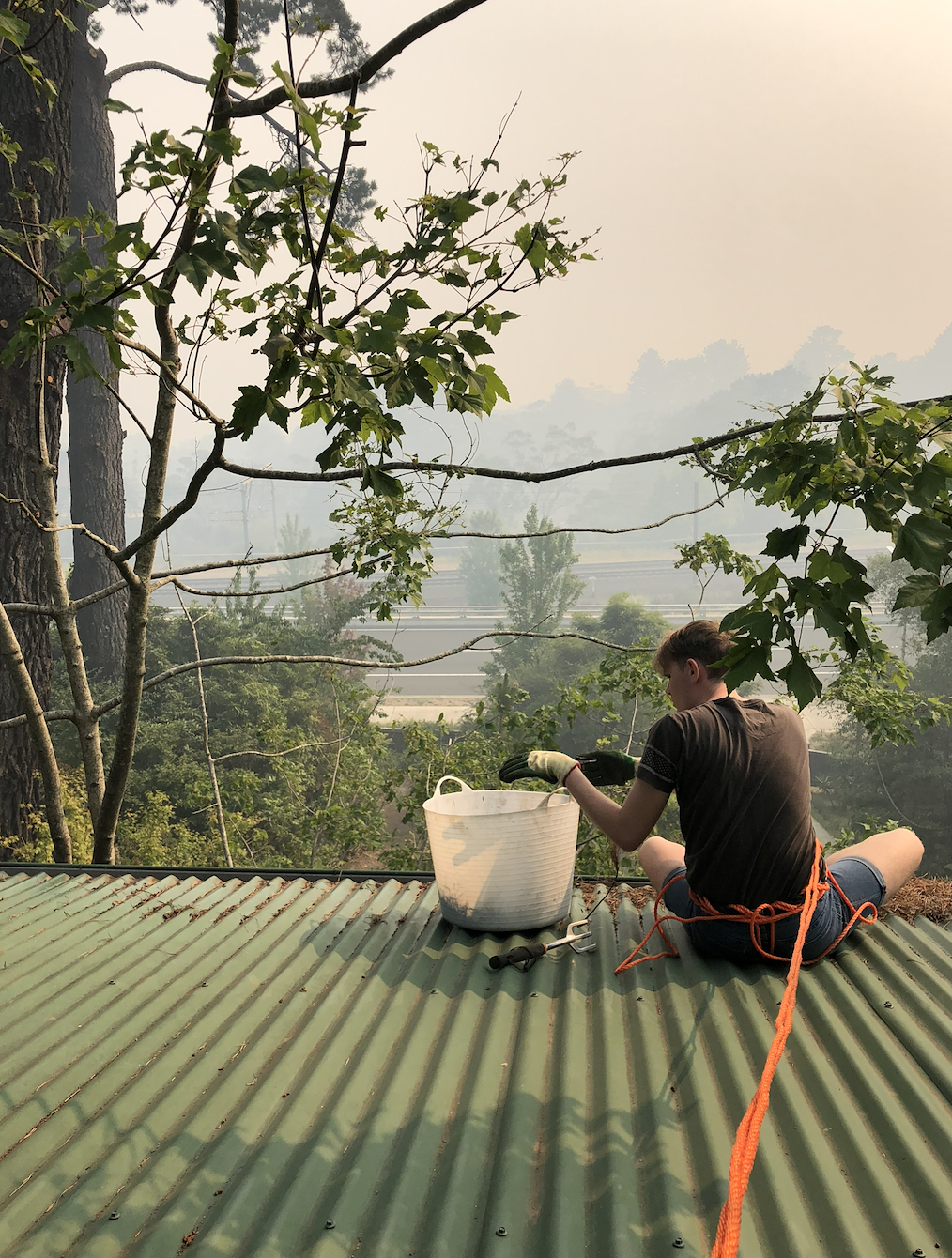
Don’t be like me! Cleaning out my gutters during Australia’s 2019–20 Black Summer fires — while the fires were already burning nearby. Wildfire preparation should happen long before the smoke arrives. Better late than never i suppose.
Your garden doesn't stop at ground level.
One of the most important things to understand about wildfire is ember attack.
A fire doesn't necessarily have to reach your garden as a wall of flame. Burning embers can be carried ahead of a wildfire on the wind and establish entirely new fires some distance from the original fire front.
That makes all those small accumulations of dry material around a house particularly important.
Gutters filled with leaves. Debris beneath decking. Dry material caught against fences. Leaves accumulated in corners. Gaps around damaged roof tiles.
They're all potential places for an ember to land.
This is something British fire services are now specifically warning householders about. If you live beside woodland, heathland, moorland or another high-risk landscape, clearing your gutters shouldn't be something you suddenly remember when there's already a fire nearby.
It should become part of normal garden and home maintenance.
PART TWO: WHEN WILDFIRE RISK BECOMES IMMEDIATE
There is an important distinction here.
The following isn't advice for standing in your garden fighting an approaching wildfire.
If a wildfire is threatening your property, follow the instructions of the emergency services. If you're told to evacuate, evacuate.
These are sensible preparations that can be made before conditions become unsafe, not reasons to delay leaving.
9. Remove the things an ember could ignite
If wildfire risk in your immediate area becomes serious and it remains safe to prepare, look at the garden through the eyes of an ember.
Where could it land?
Dry leaves beneath the hedge?
A pile of prunings beside the shed?
A dry doormat?
Timber furniture against the house?
Leaves sitting in the gutter?
A bag of compost tucked beneath a wooden deck?
Move combustible garden furniture and other loose materials away from the house. Clear accumulated dry leaves, twigs and grass. Make sure garden waste isn't sitting in a dry pile against a fence or building.
And yes, that may mean temporarily removing some of the leaf litter and dead material you've deliberately retained for wildlife.
You can put habitat material back when conditions become safe again.
10. Prepare your water before you need it
If conditions are deteriorating but you remain under official advice that it is safe to stay, make sure any stored water is actually accessible.
A 10,000-litre tank isn't particularly useful if you can't get the water out of it.
Check pumps.
Check connections.
Make sure your watering equipment is accessible.
Know where your independent water supplies are.
If a hosepipe ban is in place, check your local restrictions so you know what water you can legally use and how you can use it during fire risk.
But there is an important distinction here.
Having water available to keep your garden hydrated before a fire or deal with something minor while conditions remain safe is not the same as attempting to fight an advancing wildfire yourself.
If you discover a wildfire, get somewhere safe and call 999.
Do not attempt to tackle it yourself.
11. Think about access - both theirs and yours
Could a fire engine actually get to your property?
And could you get out?
This matters particularly in Britain's rural areas, where properties can sit at the end of narrow lanes, behind overgrown entrances or some distance from the road.
Keep gates accessible and entrances clear. Don't allow vegetation to gradually consume narrow access routes. Make sure your house name or number is clearly visible.
If your property is particularly isolated, know how you would accurately communicate its location to emergency services.
Your beautifully planted entrance isn't much use if a fire appliance can't get through it.
And know your own escape route before you need one.
Not when smoke arrives.
Before.
12. Then leave when you're told to leave
This is the most important point in this entire article.
Your garden is not worth your life.
Neither is your greenhouse.
Neither is your shed.
Neither is your collection of plants.
Neither, ultimately, is your house.
Wildfires are uncontrolled and unpredictable. Wind direction can change. Spot fires can start ahead of the main fire. Smoke can obscure roads. Embers can travel ahead of the flames and a vegetation fire can move remarkably quickly through dry grass and other fine fuels.
If UK emergency services issue an evacuation instruction, follow it.
Don't decide that because you've read an article about fire-conscious gardening, installed a water tank and planted some fleshy-leaved perennials that you're now equipped to defend your property against a wildfire.
You're not.
Preparing your garden is about reducing risk before the emergency, not giving yourself a reason to remain behind during one.
Wildfire preparedness starts when there isn't a wildfire
That's really the point of all of this.
The best time to think about wildfire isn't when the sky has turned orange.
It's when you're designing the garden.
It's when you're deciding where the shed goes.
It's when you're installing the water tank.
It's when you're choosing what to plant beside the house.
It's when you're cleaning the gutters in spring.
It's when you're deciding whether that pile of dry branches really needs to sit beside the timber fence all summer.
For those of us who care deeply about biodiversity, it also means accepting a little nuance. A wildlife-friendly garden doesn't have to be an unmanaged garden. We can retain deadwood, leaf litter and dense habitat while being strategic about where we retain it.
Britain is still learning how wildfire fits into the way we manage our gardens and landscapes. But with longer periods of hot, dry weather and fires increasingly affecting British grassland, heath, moorland, woodland and the communities around them, it's something gardeners need to start thinking about.
My experience of gardening in Australia has taught me to take that preparation seriously.
But this isn't an Australian problem anymore.
It's a British gardening conversation too.
We don't need to panic.
We need to prepare.
And we need to do it long before we smell smoke.