

Can Gardening Strengthen Our Relationships?
Some of my most memorable conversations with my sister happened while we were weeding. We were busy with our hands, working through an ordinary garden job, when the conversation moved somewhere deeper. There was no plan to have a heart-to-heart. Somehow, being alongside each other made room for it.
That memory came back to me during my conversation with relationship therapist and author Karin Blak on The Gardener’s Lodge Podcast. We explored how gardening together can help us understand our loved ones, share experiences and make space for conversations that might otherwise never happen.

Karin Blak - Psychosexual & Relationship Therapist and Author
But growing connections through gardening involves more than simply getting everyone outside. It also means asking whose ideas matter, what the garden means to each person, and whether everyone feels welcome there.
How can gardening together help us communicate?
When I told Karin about weeding with my sister, she explained why working side by side can feel different from sitting opposite someone and talking.
“So it’s easier when you don’t feel that exposure to actually talk,” she said.
In the garden, our attention has somewhere else to go. We can pull a weed, fill a pot or gather leaves while the conversation finds its own rhythm. There is less pressure to maintain eye contact or fill every silence.
That doesn’t mean every afternoon gardening with family needs to become a deep conversation. The opportunity is in spending time together without demanding a particular outcome. Sometimes you talk about the plants. Sometimes you find yourself talking about topics you don’t normally touch and other times, something much more personal.
What does gardening with your partner reveal?
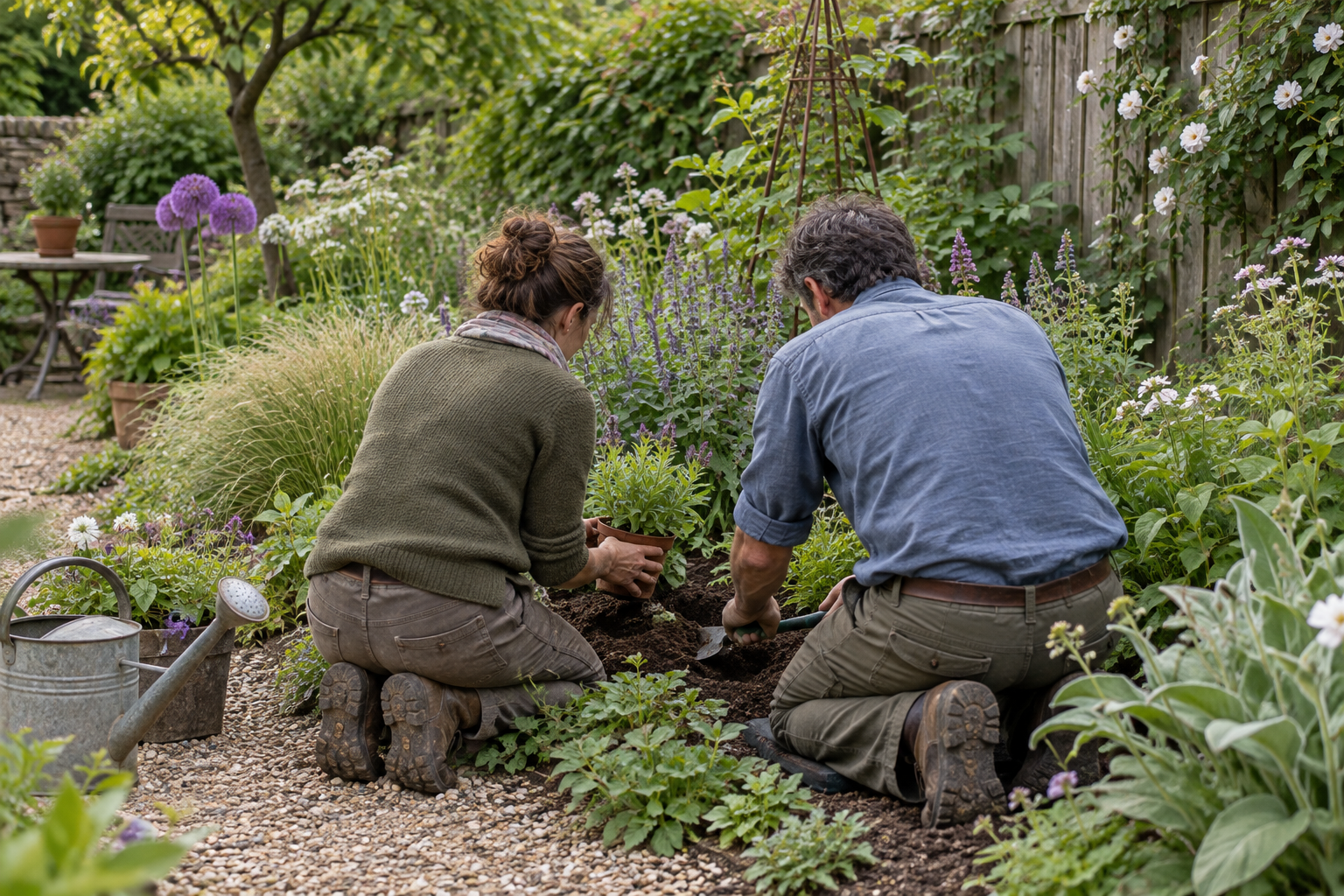
Sharing a garden can expose differences surprisingly quickly. One person wants tidy borders; the other wants to leave things wild. One dreams of vegetables, while the other wants somewhere to sit with a morning coffee.
Karin recognises this from gardening with her husband, an ecologist. Their preferences didn’t always align.
“We had to make space for each other’s ideas,” she explained.
I recognised that tension myself. As a garden designer, I can be quick to spot something that might not work. But for my partner, gardening was also a chance to play, experiment and learn. I had to recognise that my professional knowledge didn’t mean every decision should belong to me.
Gardening as a couple can become an opportunity to practise listening, compromise and learn how each other tick on a different level. That opportunity disappears if one person is always directing and the other is only allowed to help.
How do you create a garden you both enjoy?
Karin raised a useful possibility: someone’s apparent lack of interest in the garden may reflect a feeling that it belongs entirely to their partner.
“And so to create an area that is ours is part of that process of getting other people involved,” she said.
That shared area doesn’t need to involve a large scale planting project. It might be a bench, a table for tea or a quiet corner where you spend time together. Karin recalled the wooden wedding arch her husband made in their previous garden, giving the space a meaning they shared.
For me, this is an important garden design question: does the space reflect everyone who uses it? A garden can accommodate different interests without requiring everyone to become an enthusiastic gardener.
Gardening with children: give them space to explore
Karin’s earliest gardening memories involve picking strawberries with her grandmother in Denmark. What stayed with her was the experience of exploring, tasting and being met with patience.
When gardening with children, she suggests giving them a small area to make their own.
“You might guide them, but not controlling what it is that they do so they can get enjoyment from it.”
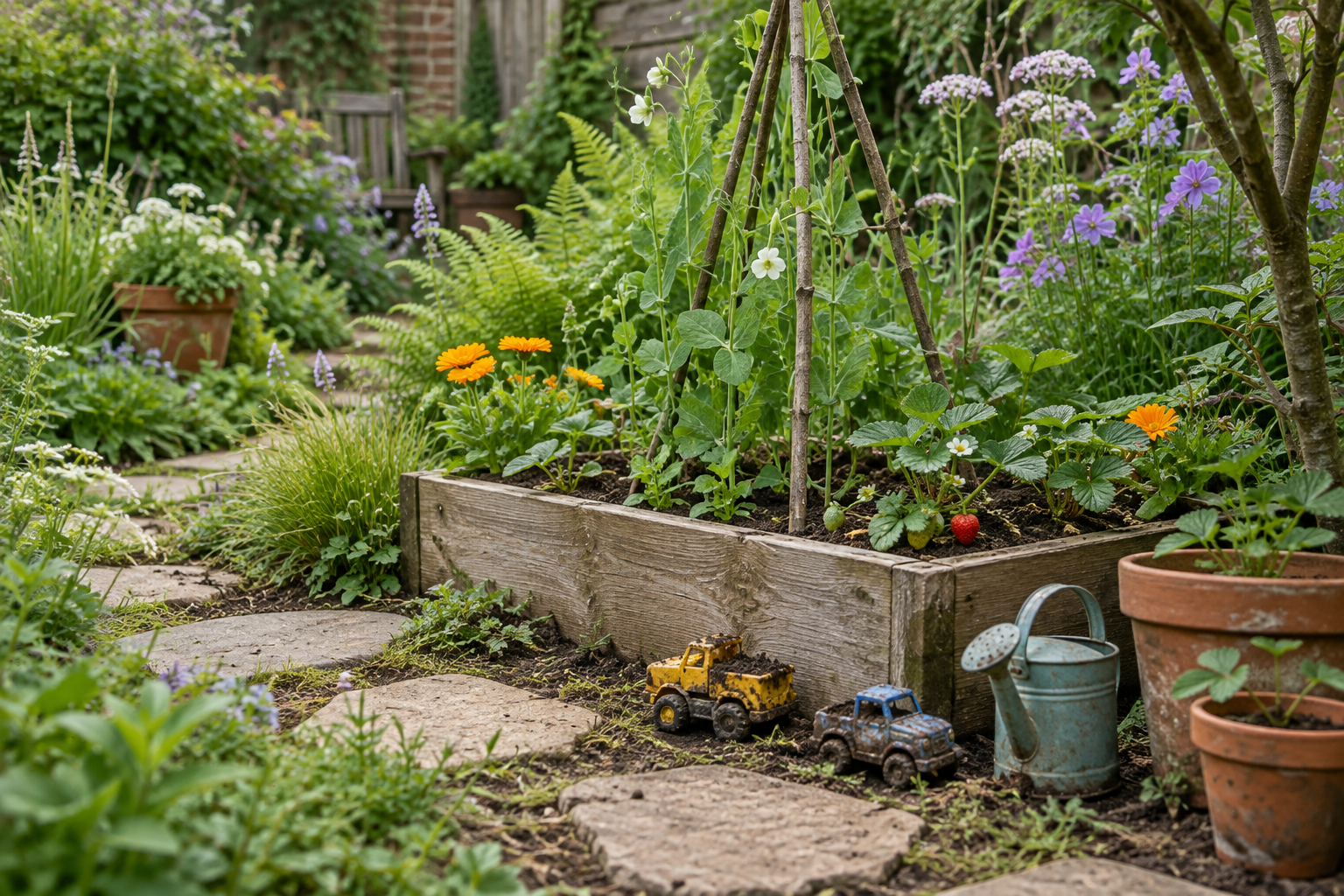
Their corner might be untidy. It might contain toys alongside plants. The point is that they have somewhere to explore and develop their own connection with the garden.
Growing food together offers another shared experience: sowing a seed, looking out for the first shoot and eventually tasting what has grown. There is something lovely about following that process together, without making a perfect harvest the measure of success.
Three questions to ask before gardening together
During the episode, Karin offered three questions for exploring what a shared garden means to you. These apply to families as well as couples:
“What did gardens mean in your childhood?”
“What do you want the garden to make possible?”
“Which parts of this space, so the garden, should be yours, mine, and ours?”
The answers might explain why one person values order while another treasures a little wildness, or why growing vegetables matters more to someone than having a beautiful border. Understanding those associations gives you somewhere to begin.

Listen to the full conversation with Karin Blak
What stayed with me after this conversation was the importance of making room: for someone else’s ideas, for children’s experiments, and for time together that doesn’t need to be productive.
In Can Gardening Strengthen Our Relationships? With Karin Blak, we also explore mindful gardening, watching pollinators and finding a connection with nature when you don’t have a garden of your own.
Listen to the full episode of The Gardener’s Lodge Podcast, and perhaps ask someone you love what they would like your garden to make possible.