

Rewilding needs people: restoring the conditions for nature to recover.
There is something appealing about the idea that nature will recover if we simply step away. After so much damage, doing less can feel like the most responsible response.
Sometimes, it is. Giving natural regeneration a chance and reducing disturbance can be important parts of rewilding. But a landscape still shaped by drainage, fragmented habitats and missing ecological processes may need help before nature can take the lead.
Rewilding can require people to restore the conditions that allow nature to recover. That is the argument I came away with after speaking to ecologist and climate activist Rhys Leighton on The Gardener’s Lodge Podcast.
Through his work with Youngwilders, Rhys is involved in habitat restoration and helping young people shape the future of landscapes. His perspective offers something more useful than a simple instruction to leave nature alone: pay attention, understand what is missing and work out how to help.
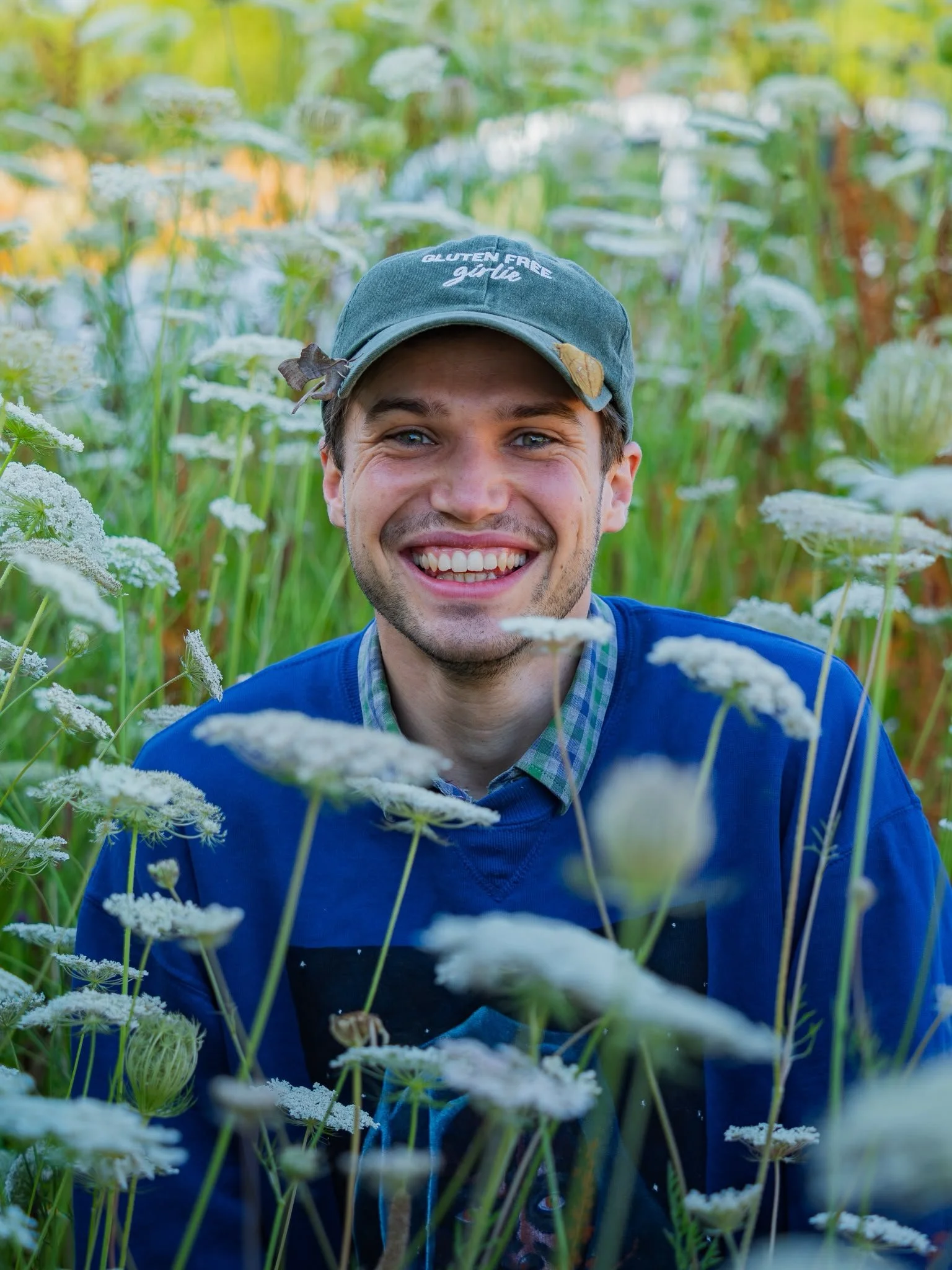
Rhys Leighton
What is rewilding, and how does it support biodiversity?
Rewilding is the restoration of ecosystems so that natural processes can increasingly shape their development. Rewilding Britain places large-scale ecosystem recovery, sufficient space and nature leading its own future at the centre of its definition. Rewilding Britain
Biodiversity encompasses the variety of life, from genetic diversity within species to the species and ecosystems themselves. Rewilding seeks to support that living diversity by restoring the processes and relationships that sustain it.
As Rhys explains:
“you’re restoring natural processes so that ecosystems can thrive.”
That distinction matters. A landscape’s ecological value involves more than the species we can count on a visit. We also need to consider whether plants can regenerate, water can move through functioning habitats and wildlife can find the resources it needs.
My view is that we weaken the case for rewilding when we describe it only as withdrawal. Its ambition deserves a better explanation: helping living systems regain the capacity to shape themselves.
Why can rewilding need human intervention?
Human intervention can be necessary where past land use has left barriers to recovery. Restoring a damaged process may require deliberate work before a less interventionist approach becomes possible.
Rewilding Britain identifies wetland drainage, altered rivers and the loss of influential species among the ways people have disrupted natural processes. Recognising and addressing those disruptions is part of restoring functioning ecosystems. Rewilding Britain
Imagine land that continues to lose water through an artificial drainage system. Walking away leaves that system operating. Where ecological and hydrological assessment supports it, changing the drainage may help recover wetter conditions.
The same principle applies to disconnected habitat. A surviving woodland may be valuable, but its relationship with the surrounding landscape also matters.
The argument becomes more clear. Human absence is a poor measure of success on its own. We should ask whether the conditions for ecological recovery are improving.
That also requires restraint. Intervention needs a reason, and there should be room to step back when nature can do the work.
Reading the landscape should come before restoring it
For Rhys, restoration begins with understanding the place in front of you.
“step one is go to the site and see what the heck you’ve got there.”
It is a refreshingly practical starting point. Before deciding what a landscape should become, we need to understand what it already supports, and what is past have been.
In our conversation, Rhys describes reading vegetation, noticing possible former ponds and considering the wider setting of a site. His point is that different places call for different responses.
A project may involve restoring wetland, improving connections between habitats or recovering flower-rich grassland. These activities can contribute to nature recovery, although habitat restoration and rewilding are not interchangeable terms. Rewilding places particular emphasis on natural processes increasingly directing change.
We should resist judging a restoration project by how quickly it delivers a familiar picture of nature. Planting trees everywhere, for example, would ignore the value of existing open habitats like meadows, wetlands, boglands and heathlands . The starting point has to be ecological understanding.
What does water have to do with rewilding?
Water is one of the clearest examples of why restoring natural processes can require practical involvement.
Rhys discusses identifying opportunities for wetland creation and slowing water as it moves through a landscape. The wider principle is to recover ecological functions that past management may have disrupted.
Natural flood management provides evidence for this approach. The Environment Agency’s updated evidence review describes how measures including floodplain ponds and managing run-off pathways can store water and reduce downstream flows. Benefits vary with the measure and its setting.
That evidence supports a careful argument. Restoring the way landscapes hold and move water can help wildlife and contribute to flood resilience. It does not mean every wetland project will prevent flooding, or that every site should become wetter.
For me, the important question is what the landscape has lost, and whether human intervention restoring that function would help it recover.
Why habitat connectivity matters for biodiversity
Nature recovery also depends on what happens between surviving patches of habitat.
Rhys describes how a hedgerow “joins things back together a little bit”, providing opportunities for wildlife to move, feed and find shelter.
There is a useful pragmatism in that observation. A managed feature can have ecological value within a heavily altered landscape.
This is another reason rewilding needs people involved: recovery often depends on cooperation across boundaries. A project’s possibilities are shaped partly by the land around it and the people responsible for that land.
Youngwilders: giving young people a role in nature recovery
One of the strongest parts of Rhys’s work is the attention given to who gets to participate.
Youngwilders describes its nature recovery projects as conceived, designed and delivered by young people aged 18–30. Youth-led nature recovery in the UK In our conversation, Rhys explains that participation extends into discussing what a landscape could become.
“It’s just groups of people coming together to think about what we could do with the land”
That is significant. Asking people to care about biodiversity while giving them little opportunity to influence their surroundings leaves a gap between concern and action.
Helping to survey, restore and make decisions about a place gives that concern somewhere to go. People can learn, contribute and develop a relationship with the changes they are helping to make.
Rhys captures that connection simply:
“It’s about connecting with the land.”
I think this deserves more attention in discussions about rewilding. Ecological knowledge matters. So does creating opportunities for people to use it, build it and take part.
Our role is to make recovery possible
The strongest case for human involvement in rewilding is that we can help remove the obstacles we have left behind.
Sometimes that will mean restoring water, reconnecting habitat or undertaking practical conservation work. Sometimes it will mean observing carefully and allowing recovery to unfold with less disturbance.
Rhys encourages us to “really embrace the fact that you do have an impact”. I take that as a challenge to become more deliberate about the impact we have.
We need the ecological judgement to know when involvement helps, the humility to recognise when it does not, and the commitment to stay interested beyond a project’s first planting day.
Rewilding asks us to make room for nature’s agency. People can play an important part in making that possible.
Hear more from Rhys Leighton in In Pursuit of a New Nature on The Gardener’s Lodge Podcast, where we explore rewilding, biodiversity, nature’s rights and our relationship with the living world.