

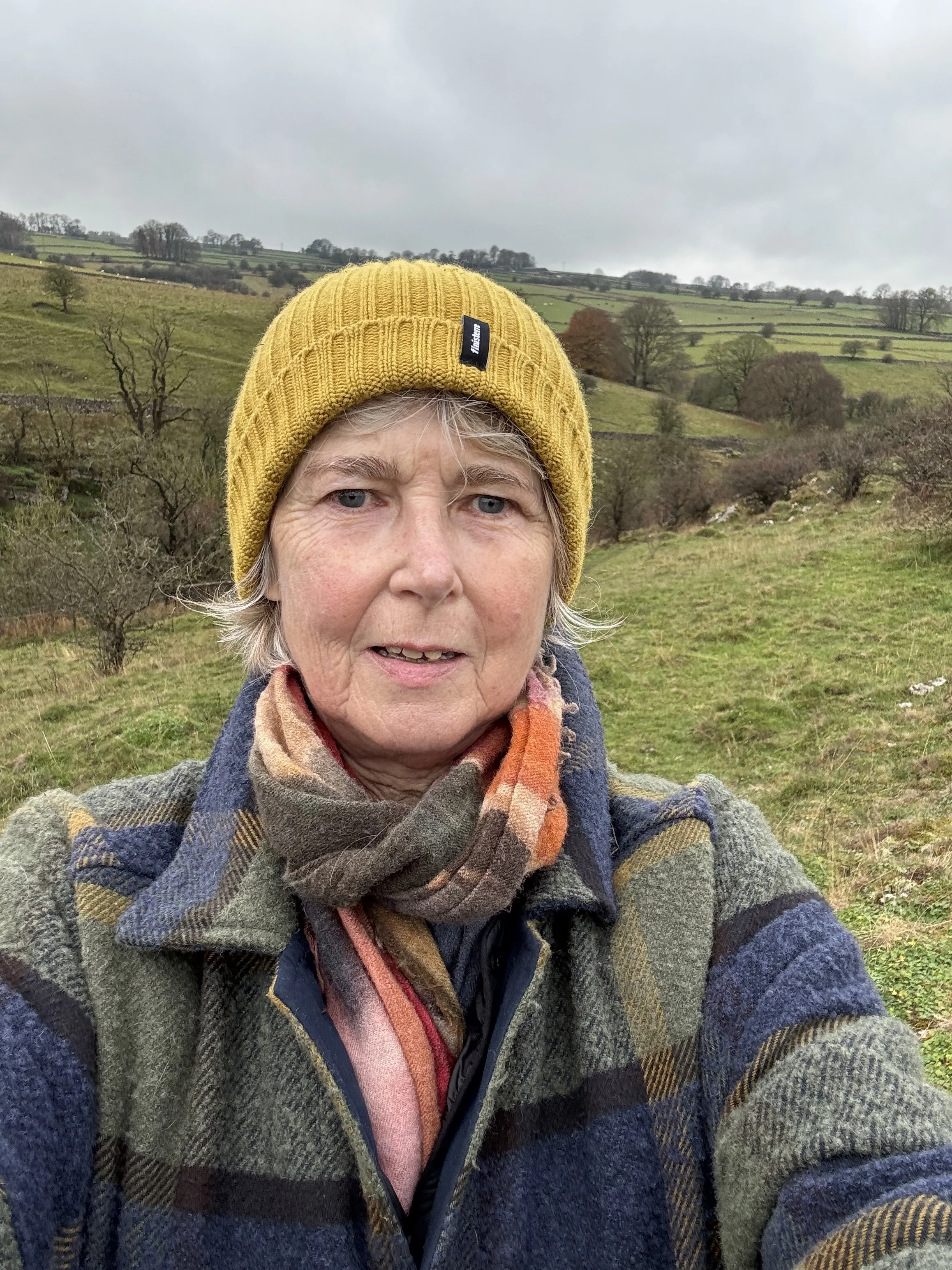
Garden Historian Camilla Anderson
By Mykal Hoare
Put a bulb in the ground in November and your planning for spring. When i design a garden or planting scheme I look forward to the future. I’m thinking about how the garden will look in three years where shade will cast when its matured. Gardening forces you to think about the now while looking ahead to the future.
What we all forget is to look backwards. I can spend ages choosing a particular flowering plant without giving a moment’s thought to the person who first wondered whether they could breed it. Each time we garden, we draw on somebody else’s knowledge, experience and experiments. Somebody grew the seed, tried the cross, kept a record, or knew enough about a plant to show a visitor what it was good for.
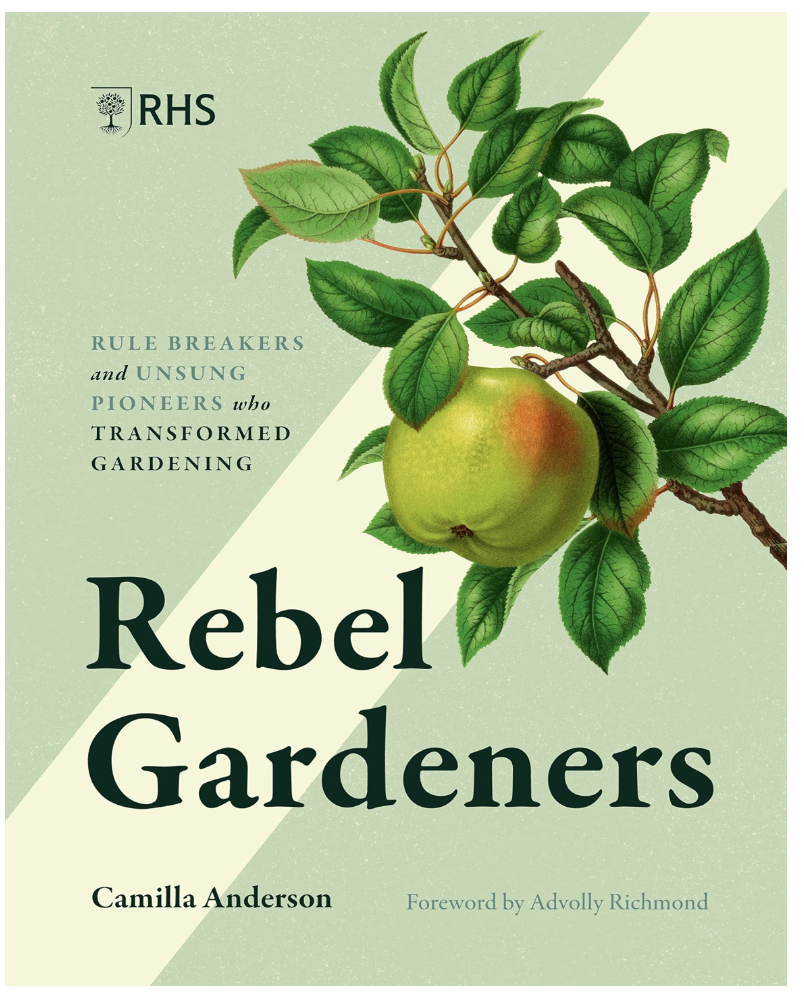
I picked up Camilla Anderson’s Rebel Gardeners in the bookshop at RHS Garden Wisley. By the time Camilla joined me on The Gardener’s Lodge Podcast, the person I most wanted to ask her about was a London nurseryman who performed one of the first recorded plant species hybridisations creating a whole new flower, then, when given the chance to take credit for it, apparently wished he hadn’t.
The flower Thomas Fairchild struggled to explain
In the early eighteenth century, Thomas Fairchild ran a sucessful nursery in Hoxton. There he took pollen from a sweet william and used it to fertilise a carnation. The offspring was sterile and became known as Fairchild’s Mule. Plants had been crossing in nature long before Fairchild came along. What earned him a place in horticultural history was choosing the parents himself and producing one of the earliest recorded deliberate hybrids between two flowering plant species.
Camilla told me what happened when word of the hybrid bloom reached the Royal Society and Fairchild was asked to speak on his creation.
“…At the last minute, he lost his nerve. And instead of saying that he had created it, he lied to the Royal Society and said that he found it growing in his garden and he had no idea how it had got there.”
Why would a nurseryman pass up the chance to put his name to a plant that had the Fellows of the Royal Society asking to see it? Camilla’s reading is that Fairchild’s faith troubled him. “At that time, it was thought that God had created everything,” she said. “No one should meddle with God’s work.”
We can’t know exactly what went through his mind and why he denied his own genius. What stayed with me was how basic the same act would seem to many nurserymen today.
What was worth carrying across an ocean?
I went into our conversation with a fairly familiar picture of European plant collecting. Somebody wealthy wanted a flower that nobody else had, and the way they would get it was by sending someone else around the globe to discover them and bring them back. There was certainly an appetite for the rare and beautiful. But what made a plant worth a month or longer Atlantic crossing?
Take Pehr Kalm. In 1747, the Swedish Academy of Sciences chose him to travel to North America to collect seeds. Among the things the academy wanted to know was whether any of these plants could feed people or livestock back home. Camilla described a section of his garden at Turku given over to currant bushes and fruit trees. For all the romance we attach to plant hunting, one simple reason to send a botanist overseas was to find something new and exciting to eat.
A century later, botanist Richard Spruce faced a different problem in Ecuador. Britain’s India Office had commissioned him to collect cinchona, a South American tree whose bark yielded quinine, used to treat malaria. Britain wanted its own plantations in India and greater control over an expensive supply. In 1861, young cinchona plants collected by Spruce and gardener Robert Cross arrived in the Nilgiri Hills of southern India.
This was where I had to stop Camilla and ask a fairly basic gardening question. How on earth do you keep a young tree alive at sea for weeks on end?
“There was a doctor called Dr Ward who’d created a sort of mini greenhouse, I guess, that meant that plants could be put into these glass boxes. And it meant that they could receive light while they were on the ship, but wouldn’t be affected by the sea water. And this had a massive effect on what plants could then be shipped from one side of the world to the other.”
It was called a Wardian case. Out on deck, a seedling could get daylight and be protected from harsh sea spray which would halm the young trees. Kew was regularly using the cases by 1847, and they helped smuggle whole crops, including rubber and cinchona, from South America into British colonies in Asia.
There’s another group of people behind those journeys. Spruce spent years with Indigenous communities in South America, recording which plants people ate, what they made from them and how they used them medicinally. A plant could be entirely new to the European botanist, but intimately familiar to the local person standing beside him.
Camilla’s book is Rebel Gardeners: Rulebreakers and Unsung Pioneers Who Transformed Gardening. To hear her tell these stories in full, including the Scottish plant collector who packed black silk pyjamas for Greenland, join us on The Gardener’s Lodge Podcast.