

Tom Leonard wants to know why we keep spraying the places where we walk our dogs and take our children.
Better known as the Drag Queen Gardener, and by his drag name Daisy Desire, Tom is a trained RHS horticulturist, working gardener and performer. He has brought drag to RHS flower shows and taken his concerns about pesticide use to Parliament. When he joined me on The Gardener’s Lodge Podcast, we spoke about what connects those worlds: a love of gardening, a willingness to challenge expectations and very little patience for being dismissed.
“I’m not a drag queen who gardens. I’m a gardener who does drag,” he told me.
That distinction matters to him. Behind the public appearances is someone who spends his working week maintaining gardens, learning about plants and thinking about how we look after the spaces around us.
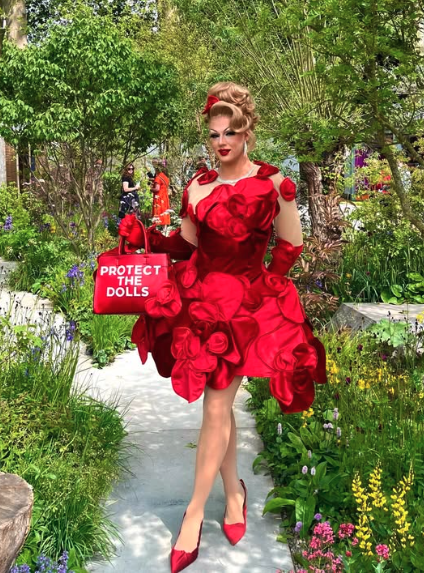
Who is Tom Leonard, the Drag Queen Gardener?
Tom’s gardening story began with an allotment after a breakup. He took on an overgrown plot with little experience, learned by making mistakes and found himself wanting to know more.
The interest grew beyond fruit and vegetables. Flowers, plant requirements and the simple pleasure of being outdoors drew him further into horticulture.
Daisy Desire came later. During lockdown, Tom decided it would be funny to dress in drag, stage a Vogue-style gardening photoshoot and post it on his gardening Instagram.
“It was supposed to be fun for me to do. It was supposed to be silly,” he said.
The response took him by surprise. Invitations followed, including to RHS Hampton Court Palace Flower Show and RHS Chelsea Flower Show. His account of arriving among photographers and celebrities without quite knowing what he was doing is one of the funniest parts of our conversation.
But the attention did not replace the work.
“I never stopped working as a gardener,” he said, describing weeks of five, sometimes six days alongside his continued training.

He wants people to recognise that knowledge. He also wants horticulture to make room for people who do not fit its familiar image. That willingness to question the industry now extends to the way public green spaces are maintained.
Why is he challenging glyphosate in public spaces?
For Tom, the issue started with something he noticed on the street.
“I would notice there were loads of yellow rings around the trees going down the roads.”
At first, he thought dogs were responsible. Then he saw a council worker spraying around the trees. He began noticing similar strips of dead vegetation in parks and around play areas.
Glyphosate is a broad-spectrum herbicide: a weedkiller used against a wide range of plants. Its uses include gardens, agriculture and the maintenance of infrastructure and amenity spaces, as the Health and Safety Executive explains in its assessment overview.
Tom questions whether spraying should be the routine answer in spaces people share with wildlife.
“The grass, it does eventually grow back,” he said.
His frustration is with the repeated intervention, the health risks it poses to our community, the appearance it creates and the priorities behind it. He sees a maintenance system too willing to reach for a short-term solution without investing in a different approach.
Taking the campaign to Parliament
Tom has taken those concerns directly to MPs.
On 21 April 2026, he co-hosted a parliamentary reception with UK Youth for Nature alongside Siân Berry MP. The organisation’s account of the event places it within its Your Wild Streets campaign, which calls for a ban on pesticide use in urban areas.
Tom described being approached to speak about glyphosate in public spaces, including parks and cemeteries. He wanted to make the issue understandable.
“I want to tell you exactly how it is from human being to human being,” he said.
“I want people to understand what I’m saying to them. I don’t want it to become some like horticultural science jargon.”
That directness runs through our interview. He is funny, occasionally sweary and quite prepared to say when something has made him angry. He also understands that getting people to care means connecting a policy debate with places they recognise.
The Parliament visit gave him an opportunity to bring the observations of a working gardener into that conversation.
What would reducing reliance on weedkillers involve?
Tom’s campaigning position is clear. The wider discussion still needs precision.
Glyphosate’s regulatory assessment and the question of whether a particular space needs spraying are related but distinct. In a June 2026 parliamentary answer, the government confirmed that the HSE was assessing glyphosate for renewal, including risks to pollinators, the wider environment, and human and animal health.
Tom’s comments should be understood as his case for changing public-space management, rather than a scientific assessment of every product or use.
There are established ways to manage unwanted plants without herbicides. Including hand weeding, hoeing, repeated cutting and mulching, with the choice depending on the plant and situation.
Applying alternatives across public spaces requires planning: which areas need intervention, what equipment and staff are available, and where vegetation could be tolerated. A garden border and a busy pavement will not need the same treatment.
This is where our conversation moved beyond weedkillers into the value we place on horticultural work.
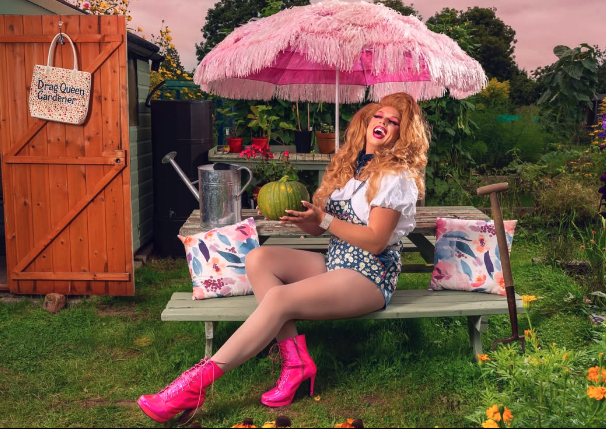
Looking after green spaces means valuing gardeners
Tom believes that reducing investment in gardeners affects the places those people maintain.
“And I’m sick of the horticultural industry not going harder and speaking louder about this because they absolutely do need to.”
He was talking about pay, knowledge and the expectation that people will accept poor prospects because they love gardening. His point connects directly with the public-space debate: changing maintenance practices means supporting the people expected to deliver them.
“We look after where your kids play,” he said.
It is an easily overlooked part of the profession. Gardeners care for places that people use every day, often without thinking about who keeps them usable or what that work involves.
For me, that is the strongest thread running through Tom’s advocacy. He wants people to take gardening seriously: the skills, the people and the decisions that shape our everyday surroundings.
And he has no intention of letting the subject drop.
“This is something that is not going away and I’m not going to stop shouting about this until the councils actually do something about it.”
Listen to my full conversation with Tom Leonard, the Drag Queen Gardener, on The Gardener’s Lodge Podcast. We discuss his unexpected route into horticulture, Daisy Desire, LGBTQ+ visibility, fair pay for gardeners and his campaign against glyphosate use in public spaces.