

This Is Why Planting Design Will Shape the Gardens of the Future - Andrew Fisher Tomlin

Andrew Fisher Tomlin
Andrew Fisher Tomlin’s first book, The Modern Professional Planting Designer, has the feel of something long held and carefully released. ‘I wrote it to get a lot of things out of my mind,’ he says simply. Years of teaching, practice and observation are distilled into a work that is as reflective as it is practical.
Although I amsurprised that this is his first solo publication, Andrew explains that timing was everything. ‘I’d been asked to write books for years,’ he says, ‘but they were never the books I wanted to write.’ Encouraged by colleagues and former students, he eventually realised that planting design — not garden style or trend — was the subject that demanded clarity.
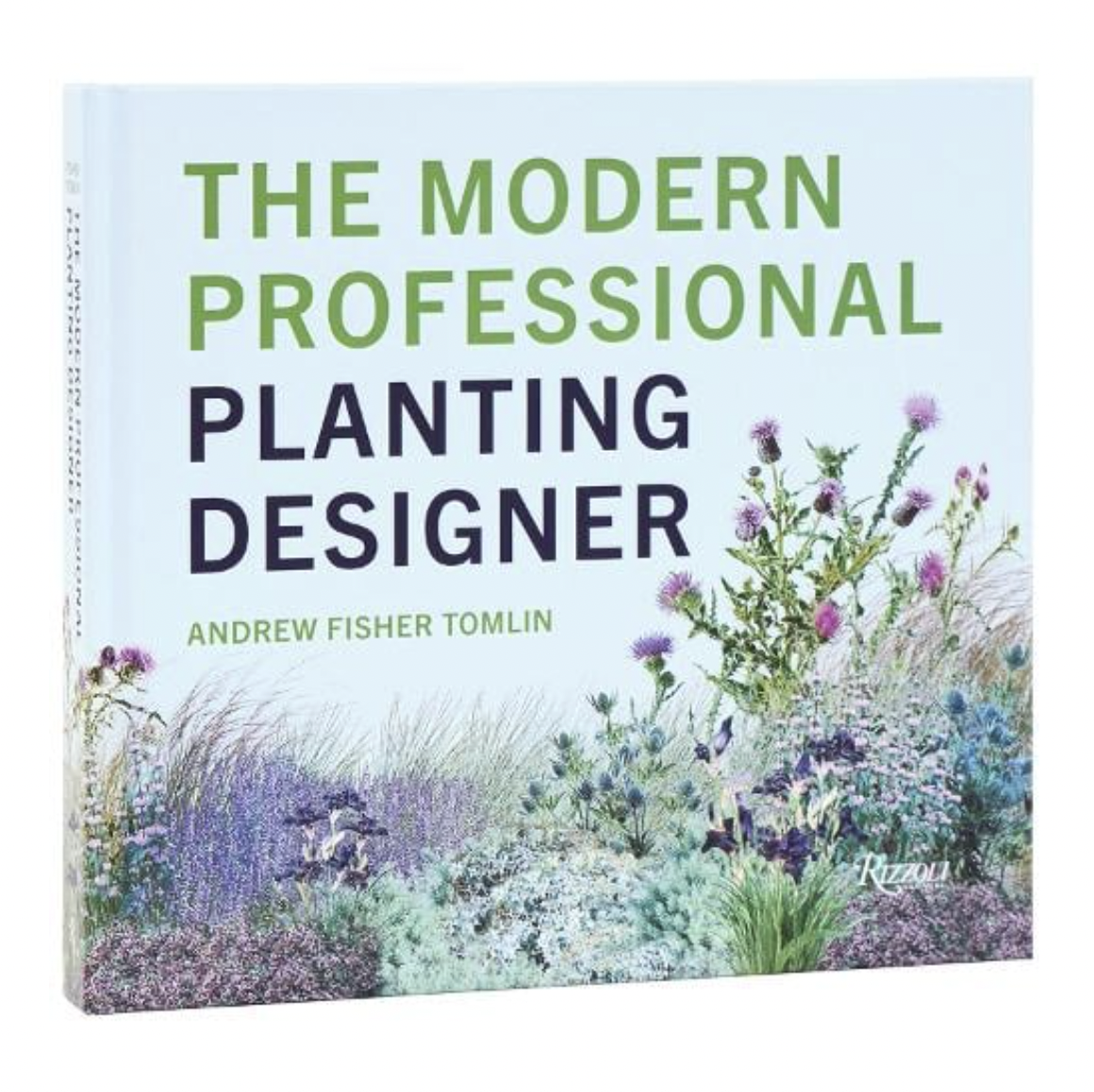
The Modern Professional Planting Designer by Author Andrew Fisher Tomlin
The book is aimed primarily at professionals: designers, gardeners, horticulturists and students. But its reach is broader than that. ‘People kept saying to me, “I’ve got all these planting books, but I don’t know how it all fits together.”’ His response was to provide structure, a framework that contextualises ornamental, naturalistic, wild and rewilded approaches without elevating one above the others.
‘You can only dismiss one way of doing things if you understand it,’ he says. ‘You can’t just dismiss it because aesthetically it doesn’t work for you.’
This pluralism is deliberate. Andrew resists the idea that there is a single correct response to the climate and biodiversity crises. Instead, he argues for a broad planting toolbox, one that allows designers to respond intelligently to different sites, cultures and expectations. ‘Most of us can’t concentrate on one area,’ he says. ‘We need options.’
Teaching has played a central role in shaping this thinking. At the London College of Garden Design and at Kew, Andrew works with students whose botanical knowledge is immense. ‘I learn so much from them,’ he says. ‘It feels a bit naughty, really, that I’m being paid to go teach but i also learn from them.’
That exchange of knowledge extends into his consultancy work, most notably with the Commonwealth War Graves Commission. Tasked with helping reimagine planting across 12,000 sites in 170 countries, Andrew is focused less on imposing solutions than on empowering gardeners. ‘It’s about giving people the design language to be able to advocate for planting,’ he explains.
Advocacy, he believes, is now one of the planting designer’s most important skills. ‘We still have to fight for planting areas and diversity,’ he says. ‘Architects and engineers often have more weight in a team.’ But the tide is turning, particularly in public and corporate spaces where outdoor environments are increasingly valued.

Throughout the book, and throughout Andrew’s career, planting is framed as a form of communication between designer and client, garden and visitor, people and nature. ‘Storytelling in planting is probably the core idea,’ he reflects. ‘Whether that story is about colour, heritage or ecology, it gives planting meaning.’
Beautifully illustrated and meticulously structured, The Modern Professional Planting Designer resists the label of textbook, even as it earns its place on professional desks. It is, instead, a map, one drawn by someone who has spent a lifetime paying attention.