

Lichens: The Tiny Organisms That Reveal the Health of Our Planet
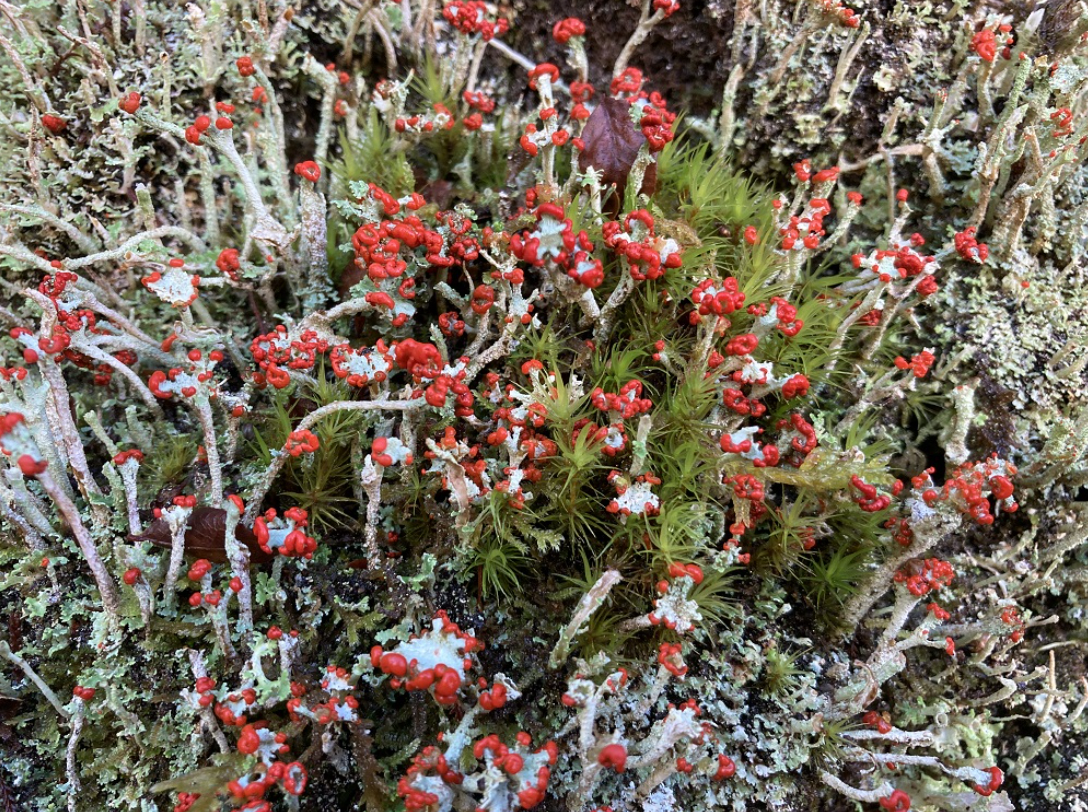
Devils matchsticks Cladonia © April Windle
If you want to understand the health of our planet, don’t look up, look closer.
Lichens, those crusty patches on trees, walls, and pavements are some of the most powerful indicators of environmental health we have. They quietly record changes in air quality, biodiversity, and ecosystem stability, making them essential to understanding the world around us.
In a recent episode of The Gardener’s Lodge, I sat down with lichenologist April Windle from The British Lichen Society to explore why lichens matter and why they deserve far more attention in our gardens, landscapes and urban areas. I must admit, i knew very little about lichens but April really blew my mind.
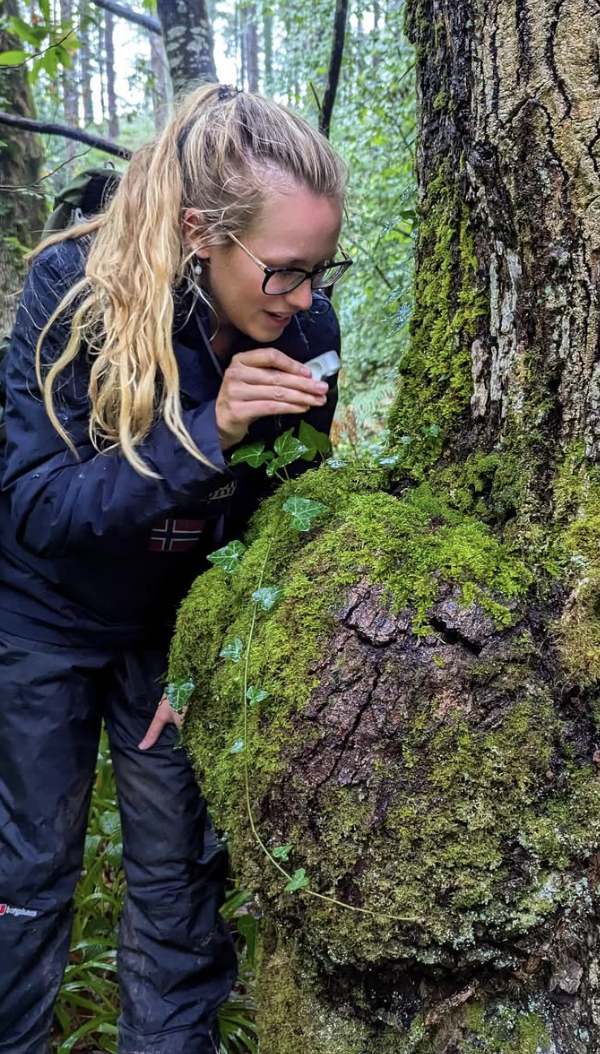
April Windle conducting field research
What Are Lichens? (And Why They’re So Unique)
To understand why lichens are so important, we first need to understand what they actually are because most people get this wrong.
“Most people actually think that lichens are plants… they’re very plant-like in appearance… however, lichens are not plants.”
Lichens sit within the taxonomic kingdom of fungi, but they aren’t just a fungus either.
They are a symbiotic partnership between a fungus and either algae or cyanobacteria. The fungus provides structure and protection, while the algae or bacteria produces energy through photosynthesis essentially feeding the entire system.
“Only when you get all these different life forms come together do you get this physical unit that we call a lichen.”
This relationship is what allows lichens to survive in extreme environments—from city streets to mountain tops, where many other organisms couldn’t.
And here’s where it gets even more surprising:
“Lichens are actually more closely related genetically to animals and humans than they are to plants.” April explains.
But perhaps an interesting way to think about lichens is this:
“Lichens really fit the definition of an ecosystem more than they do a species… they’re made up of lots of different parts.”
They are not a single organism, they are a functioning, self-contained ecosystem.
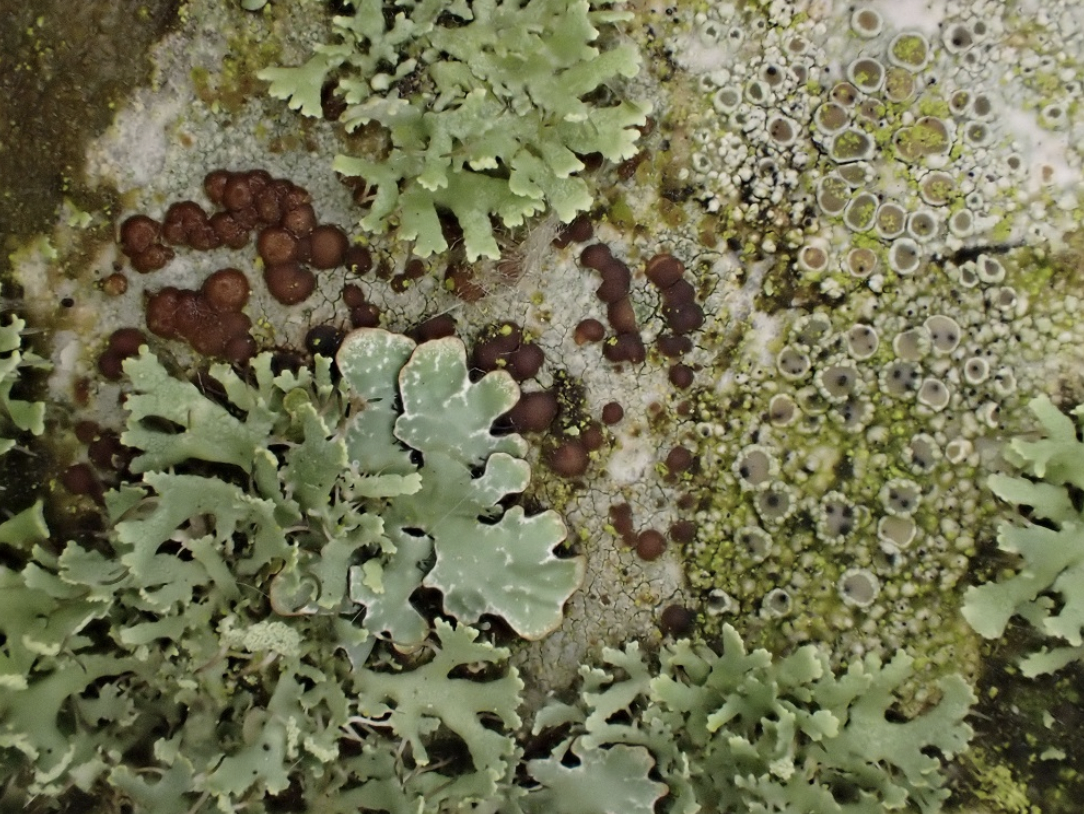
Lichen community on twigs © April Windle
Lichens as Bioindicators: Nature’s Air Quality Monitors
One of the most important roles lichens play is as bioindicators, organisms that reveal the condition of the environment around them.
Unlike plants, lichens don’t have roots. They absorb everything directly from the air.
“They cannot differentiate between toxins and pollutants and the necessities that they need for survival… everything from their environment gets absorbed.”
This makes them incredibly sensitive to pollution.
Different species of lichen respond differently to environmental conditions:
Some thrive in polluted, nitrogen-rich environments
Others only survive in clean, pristine, unpolluted air
This means that simply observing which lichens are present can tell us a huge amount about air quality.
Rather than disappearing entirely from polluted environments, the lichens which are found in these environments change, quietly reflecting the state of the environment.
Indicators of Ancient Landscapes and Ecosystem Health
Lichens don’t just tell us about pollution—they also reveal the history of a landscape.
Because they grow slowly and are difficult to establish, certain species are only found in long-standing, undisturbed habitats.
“They’re fantastic ancient woodland indicators because they’re so slow at growing and really poor at colonising.”
This makes them incredibly valuable in conservation, helping ecologists identify ancient woodlands and areas of long ecological continuity.
In a rapidly changing world, lichens act as living records of environmental stability.
Small Organisms, Big Impact on Biodiversity
Despite their size, lichens play a meaningful role in ecosystems.
They are producers, meaning they create their own energy otherwise thought of as food through photosynthesis—forming part of the base of certain food chains.
In the UK, they support:
Slugs and snails
Moth and insect larvae
Microfauna and invertebrates
In colder regions, they’re even more critical, forming a key part of the diet of animals like reindeer.
But beyond food, lichens also:
Provide habitat for tiny organisms
Increase biodiversity in microhabitats
Contribute to the overall complexity of ecosystems
They are, quite literally, ecosystems within ecosystems.
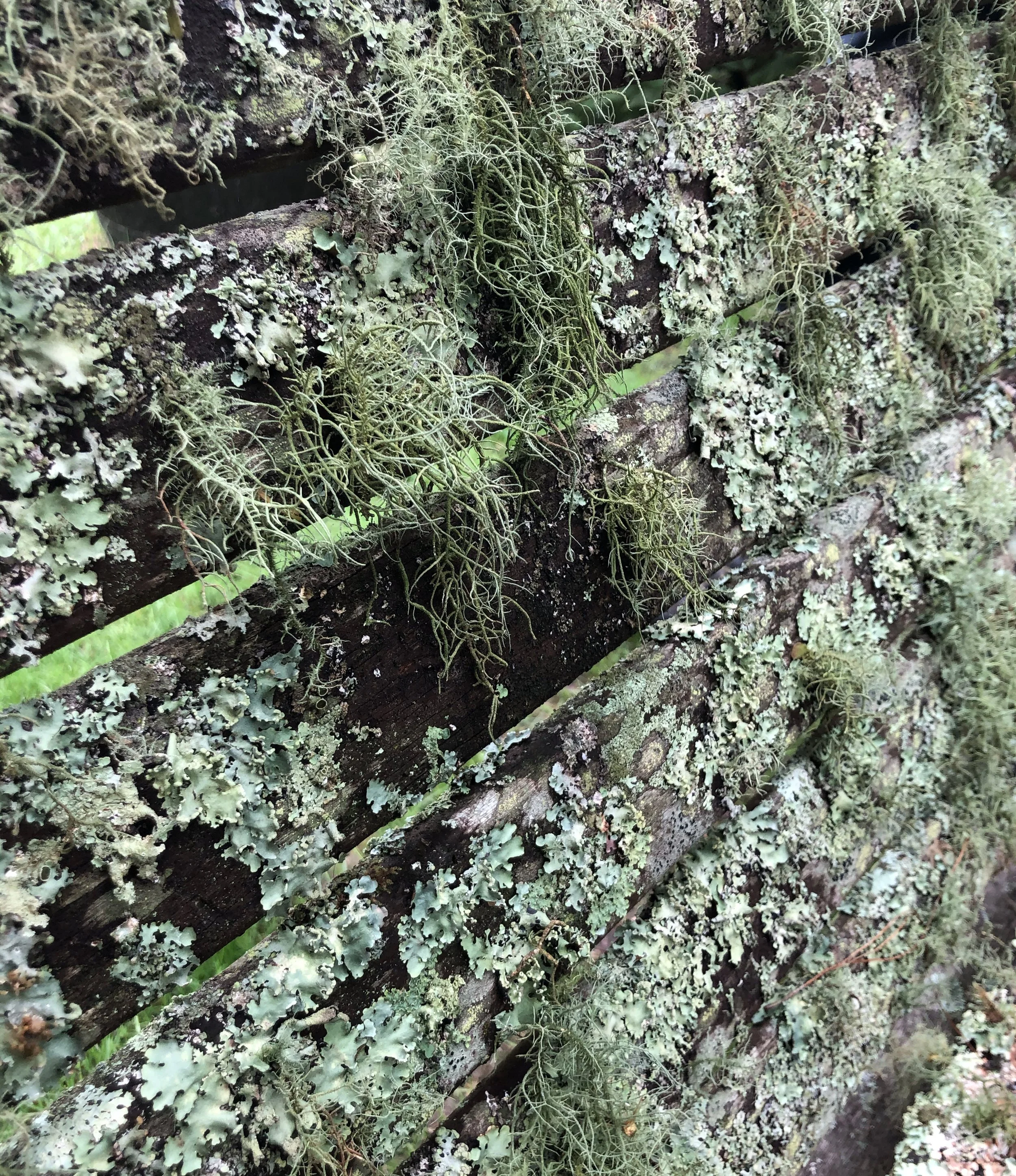
Lichens on timber slats
The Future of Lichens: Science, Medicine, and Environmental Change
Lichens don’t just tell us about the present—they may also shape the future.
They produce a huge range of unique chemical compounds, many of which are still largely unexplored.
“Some lichen chemicals have been shown to slow down the growth of tumour cells in laboratory conditions.”
Despite this potential, lichens remain under-researched—largely due to their slow growth and complex biology.
At the same time, they are under threat from:
Air pollution
Climate change
Habitat loss
Changes in land management
Because they are so sensitive, lichens are often among the first organisms to respond to environmental stress making their decline an early warning signal.

The Work of the British Lichen Society
Protecting and understanding lichens is where organisations like The British Lichen Society play a vital role.
Through research, education, and conservation, they are working to:
Raise awareness of lichens and their importance
Support scientific study and recording
Promote habitat protection and management
Their work is essential in bringing lichens out of obscurity and into the spotlight—where they belong.
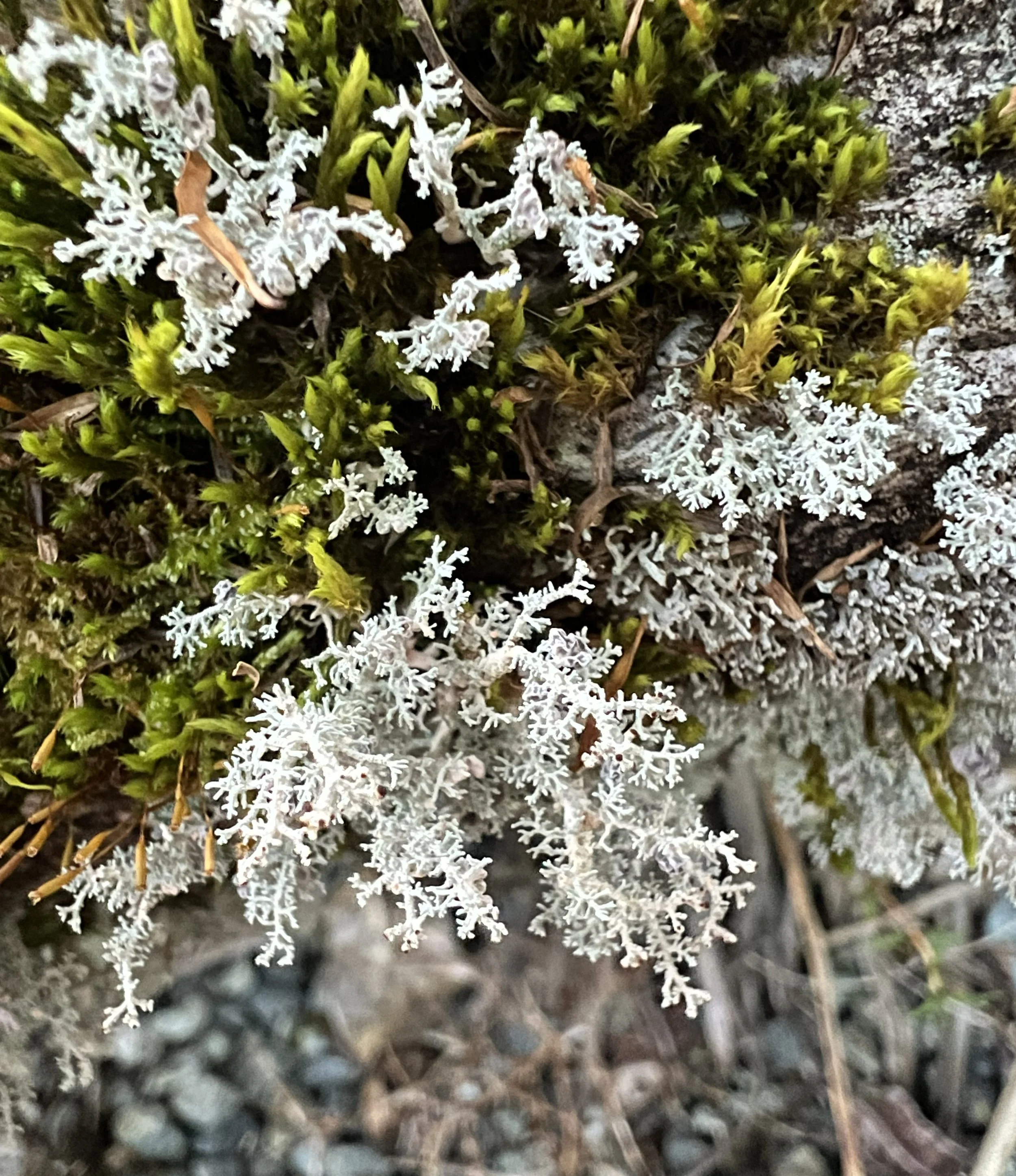
Lichen and Moss Cluster
Why You Should Start Noticing Lichens
Lichens are not rare. They are not distant. They are right outside your door.
And once you start noticing them, everything changes.
“If you leave your front door now, you can more or less guarantee you stand immediately on a lichen… they’re absolutely everywhere.”
They are indicators, ecosystems, and storytellers of the natural world all in one.
“When you get into lichens, your walks will never be the same again.”
🎧 Listen to the Full Conversation
If this has sparked your curiosity, you can dive deeper into the world of lichens in my full conversation with April Wendell on The Gardener’s Lodge podcast.
👉 Listen now and discover the hidden ecosystems living all around you.