

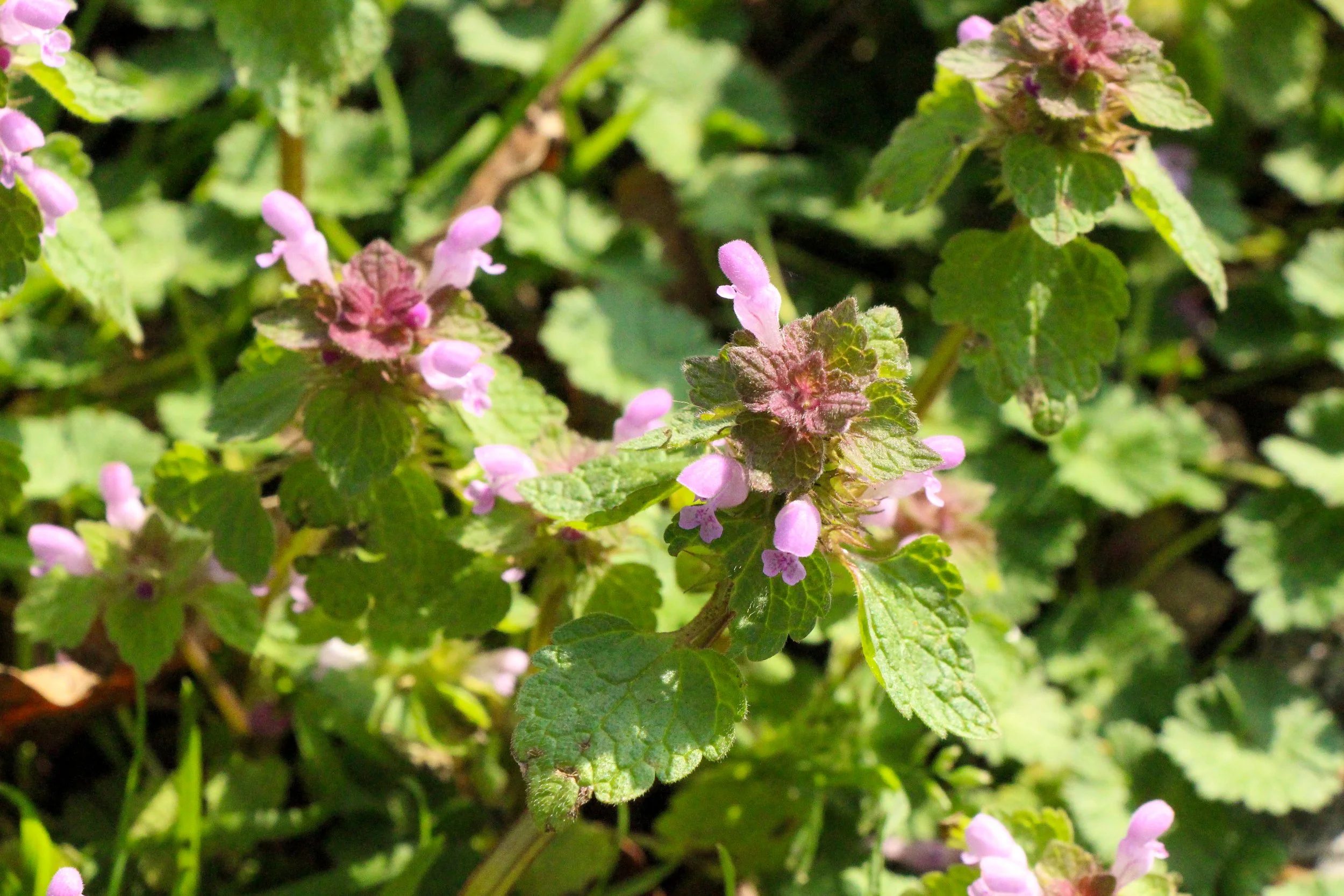
Lamium purpureum | Red Dead-Nettle
Many of us make the mistake of seeing red dead-nettle in our gardens as a weed or a pest to be stamped out or removed. However, Lamium purpureum is actually a little hero that should be cherished. Yes, it may need to be kept under control so it doesn’t take over, but it should be celebrated as the biodiversity champion it truly is.
When I design gardens that are not only beautiful but function as biodiversity hubs, attracting and offering refuge to wildlife and beneficial insects, I like to dedicate a minimum of 20% of the planting to UK native species. If I can make it work with a client’s vision, I’ll aim for 50% of the plants to be native. One plant I particularly like to sneak in, (or leave in the landscape) is controversially Lamium purpureum, known as Red Dead-nettle.
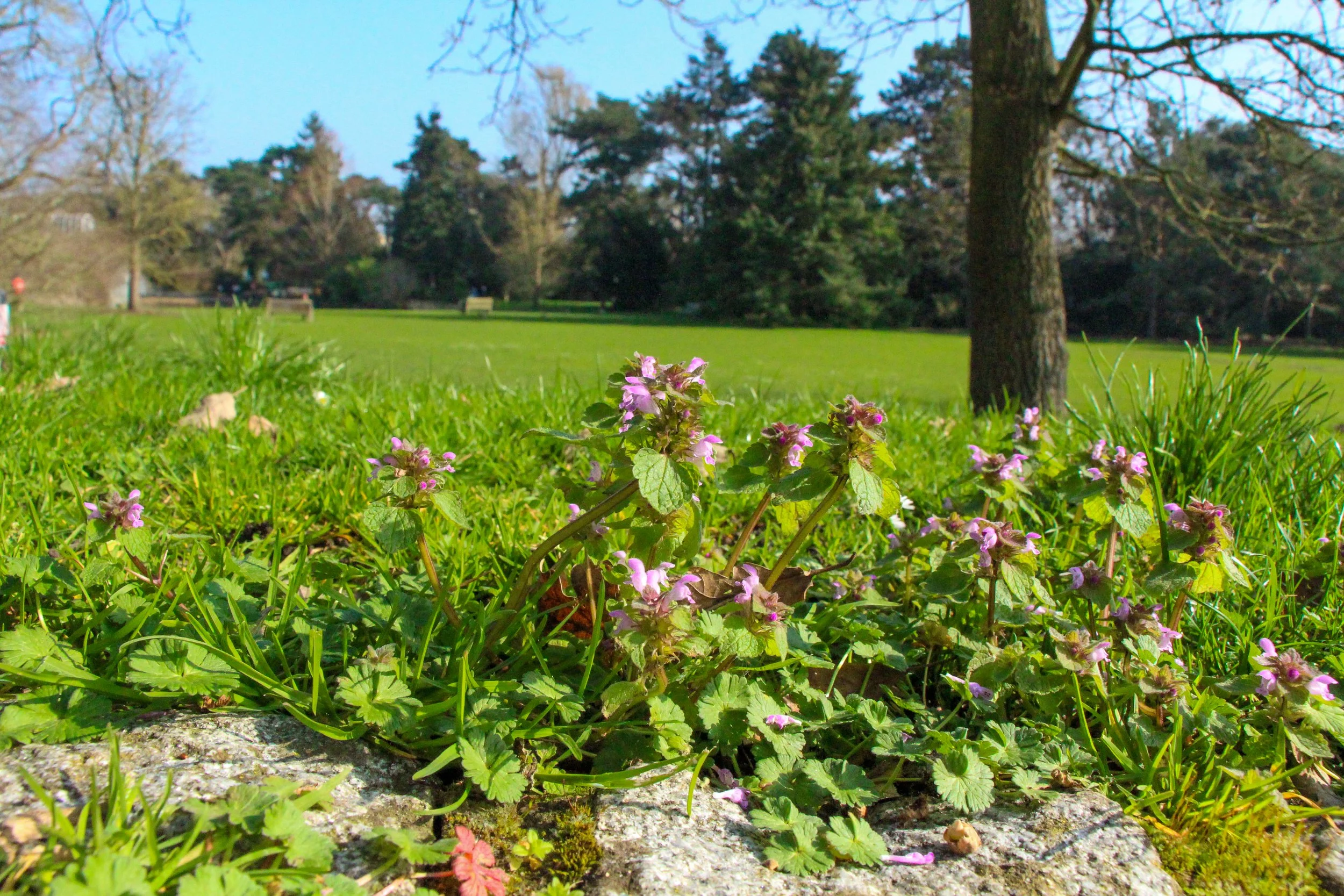
Lamium purpureum in Kew Gardens
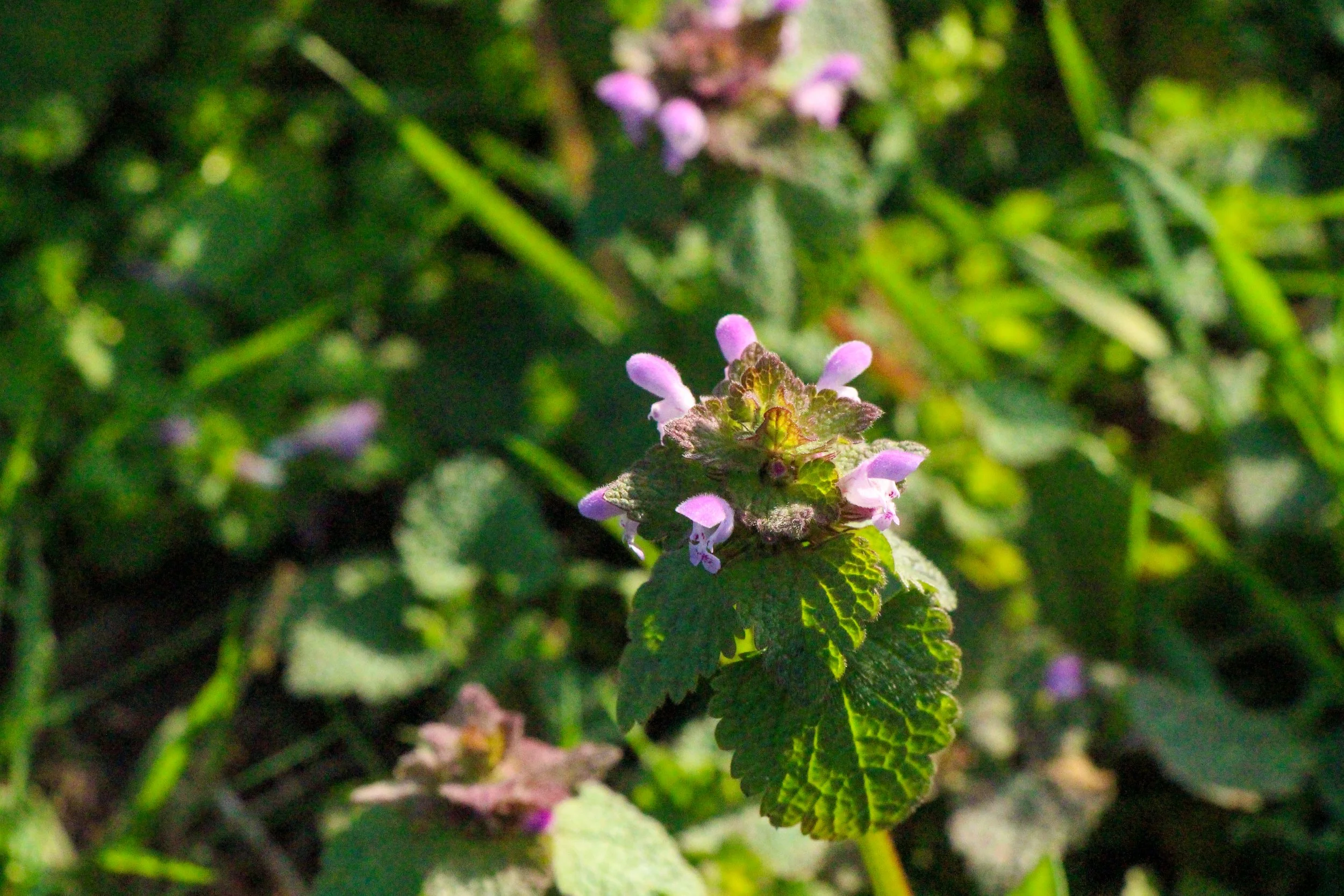
Close up of Lamium purpureum fresh growth and blooms
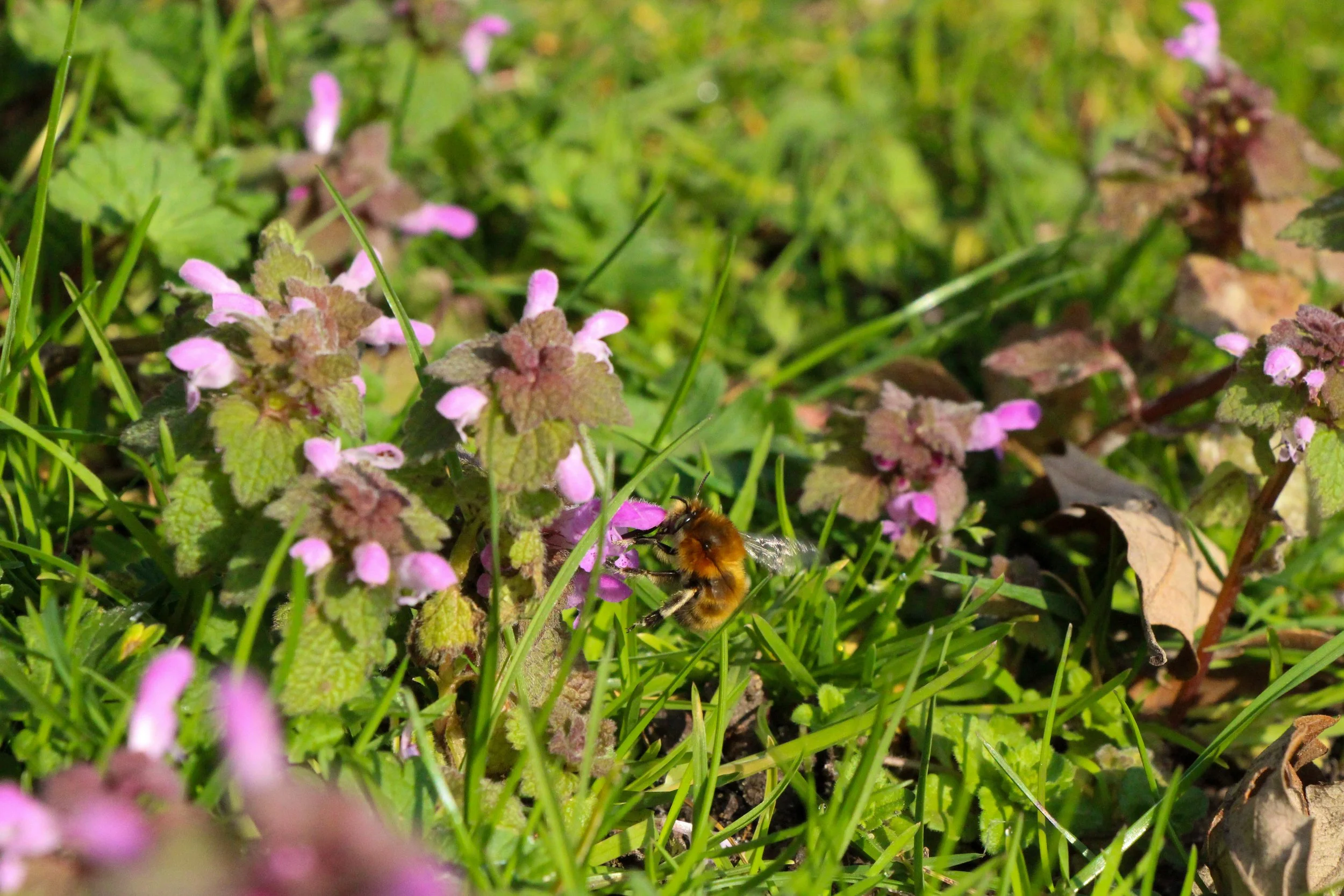
The plant that many discard as a weed is actually a biodiversity champian. Many species of long-tongued insects feed on red dead-nettles for nectar and pollen. Bumblebees and red mason bees are among the many that take advantage of this early and long flowering species, often benefiting from its nectar before much else blooms. The species flowers from March throughout October, providing resources consistently across the warm season.
It’s not just the purple-pink blooms that support native insects, caterpillars, angle shades and white ermine moths feed on the plant’s foliage.
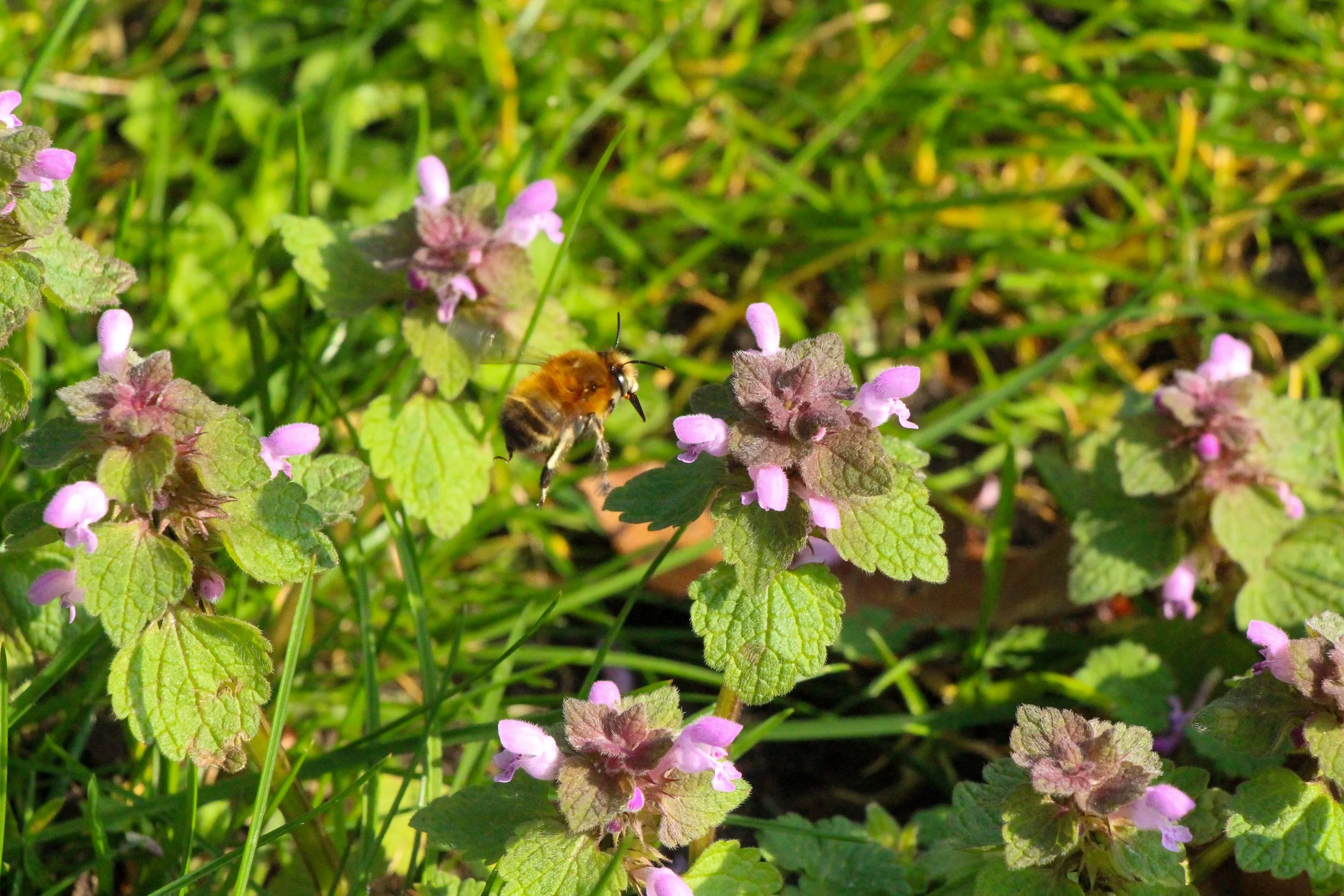
Bee mid flight with Lamium purpureum
Bee foraging for nectar Lamium purpureum
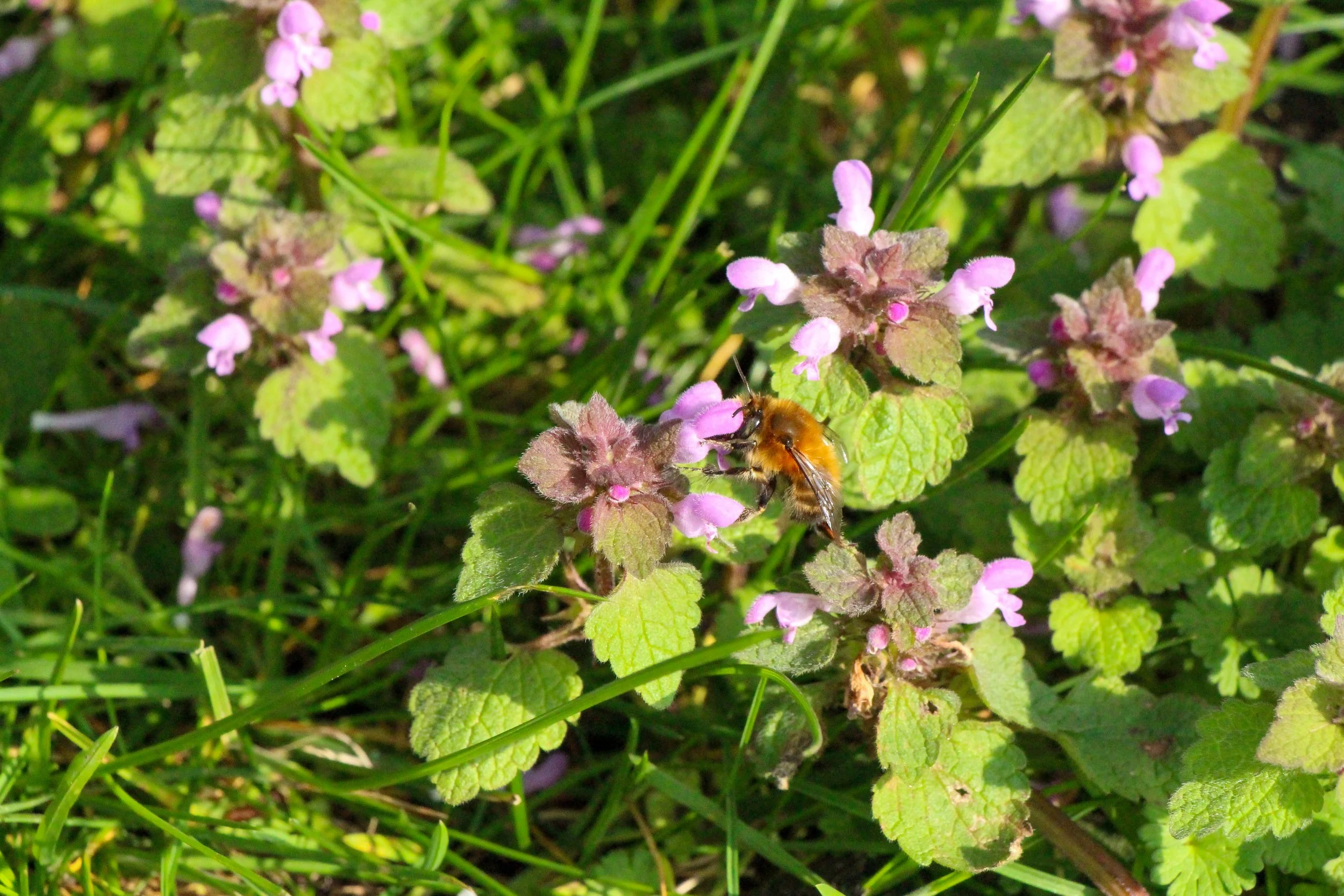
When you look closely at Lamium purpureum, you’ll see it is actually a remarkably pretty plant. It may not be the most showy, but it is lovely in its own subtle way. Lush green mature leaves give way to purple-hued fresh growth, leading to the dainty, small, pink-purple, tube-shaped blooms.
Red dead-nettles are perfect for productive or vegetable gardens. They are rich in nitrogen, potassium, iron, magnesium, and calcium all of which is accessible when chopped and added to your compost pile. Planted around your productive garden, they also increase pollinator activity, helping to pollinate your fruits and vegetables. Beyond that, Lamium purpureum is a useful plant for humans as well!
Uses:
Eat Raw: Young, tender leaves can be eaten fresh in salads or used as a garnish. They are packed with vitamin C and iron and are a good source of fibre.
In Cooked Meals: Leaves can be sautéed and used like baby spinach in cooked dishes.
Tea: Fresh or dried leaves and flowers can be steeped. This can help fight inflammation, and some research suggests it may act as a natural antihistamine.
Topical Medicine: A balm made from the leaves promotes wound healing and can be used to treat minor cuts, rashes, and insect bites.

Next time you see it popping up in your garden, take a moment to observe the insect life surrounding it and ask yourself, “Can I live with leaving this here?” If the answer is yes, let it be, allow the wonderful pollinators to enjoy it, even benefit from it yourself!