

Ants Grow Cyclamens So You Don’t Have To!
If you’ve ever grown cyclamens, you may have noticed how they quietly spread over time, not just creating a dense carpet where they were initially planted but popping up in new corners of your garden.
The truth is, ants are literally plant propagating cyclamens for you.
This fascinating process is one of the many reasons cyclamens can be such valuable plants in thoughtful, ecological garden design especially in London and across the United Kingdom, where shade, seasonality, and an increased emphasis on biodiversity are playing a larger roles in successful planting schemes.
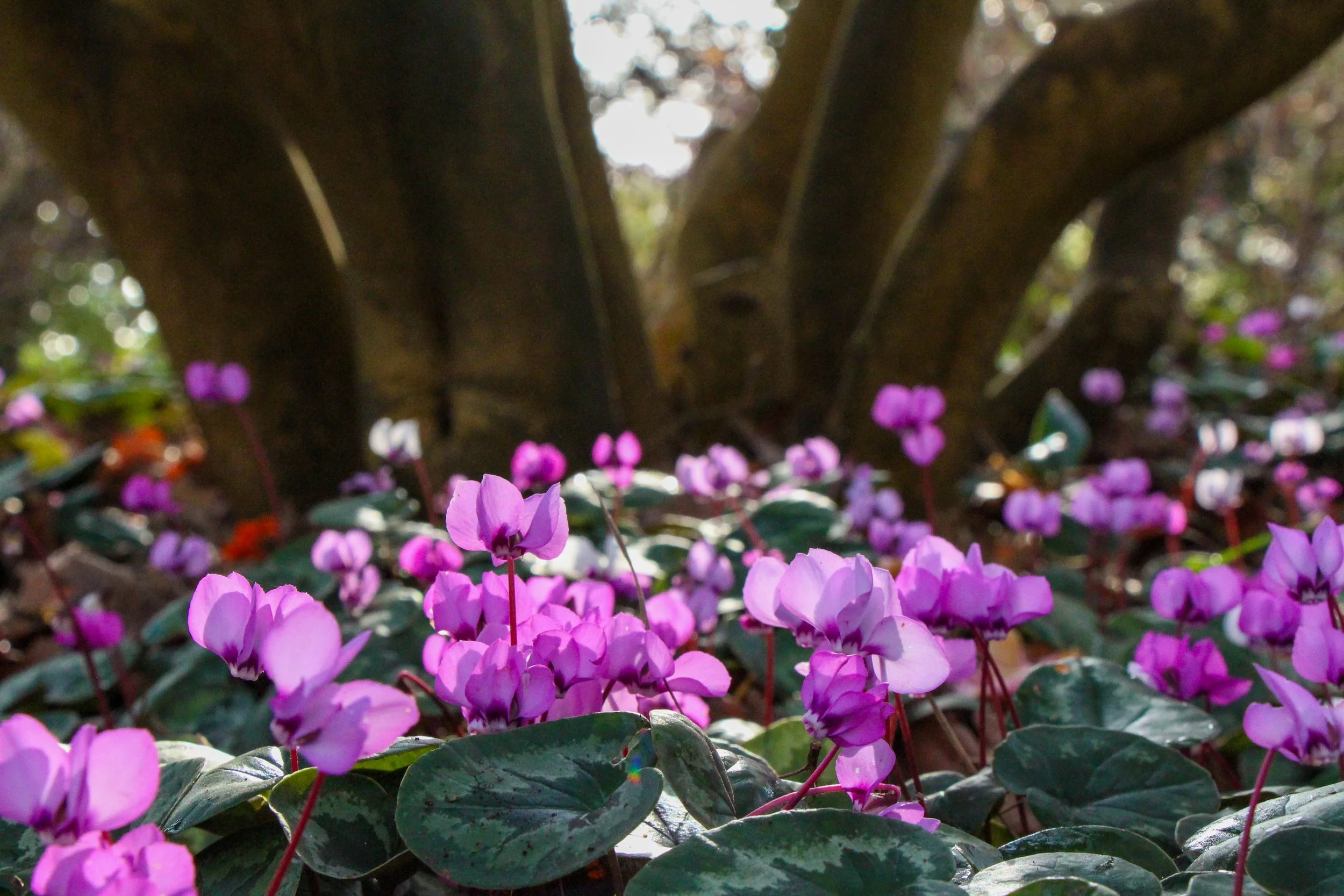
Cyclamens
The Science: How Ants Spread Cyclamen Seeds
Cyclamens use a natural strategy called myrmecochory, which simply means seed dispersal by ants.
Here’s how it works:
After flowering, the cyclamen’s stem curls downward toward the soil.
The seed capsule ripens right at ground level.
Each seed has a small fatty coating called an elaiosome.
Ants carry the seeds back to their nests to eat this nutritious coating.
The seed itself is discarded underground in nutrient-rich soil (The perfect place to germinate.)
In other words, cyclamens have evolved a symbiotic partnership with ants that helps them spread naturally and establish in ideal growing conditions.
Why plant Cyclamens in the ground
For gardens, this isn’t just an interesting fact it has real practical value.
Cyclamens are:
Low-maintenance naturalisers
Once established, they gently spread without becoming invasive.
Perfect for shade planting
They thrive under trees, in woodland gardens, and in north-facing urban spaces.
Supportive of biodiversity
They form part of a living ecosystem, interacting with insects and soil life.
Seasonally valuable
They provide colour in autumn and winter when many gardens feel dull.
This makes them ideal for modern UK gardens that prioritises sustainability, resilience, and year-round interest.
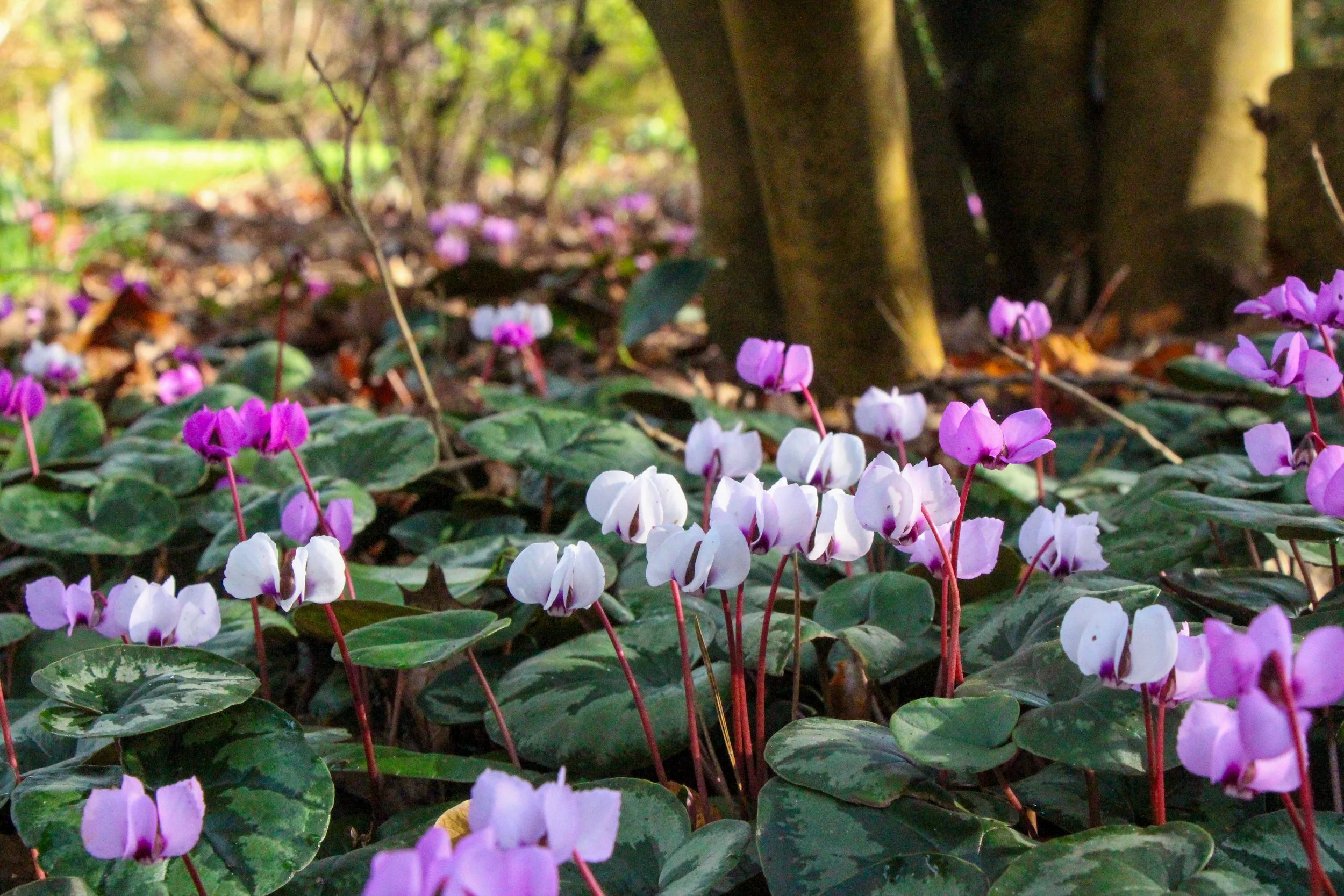
Cyclemens in woodland garden shade

A Tiny Example of Intelligent Planting
Cyclamens remind us that good garden design isn’t just about how a space looks — it’s about how it functions as a living system.
When you plant cyclamens, you’re not just adding flowers. You’re introducing a self-sustaining ecological relationship that quietly improves your garden over time.
Sometimes the smallest plants tell the biggest stories.