

Designing for Winter Interest | A Garden Designer’s Guide
Winter is often misunderstood in the garden. Often treated as an empty season, something to endure, a time to hibernate until spring arrives. In my professional work, I’ve noticed clients brains completely shut off to their gardens during winter. But as a garden designer, I see winter differently.
It is time to change the way we see winter. The garden actually has so much to offer us at this time of year!
Winter is not a pause. Yes, it is a more quiet chapter, but still rich with detail, texture, and atmosphere. When designed well, a winter garden has depth and presence, offering beauty that is subtle (or not), thoughtful, and intriguing.
Rather than relying on flowers alone, winter interest comes from a careful balance of form, texture and colour Below are the key elements I design with when creating gardens that truly earn their keep through the cooler season.
Coloured Stems: ignite your winter garden
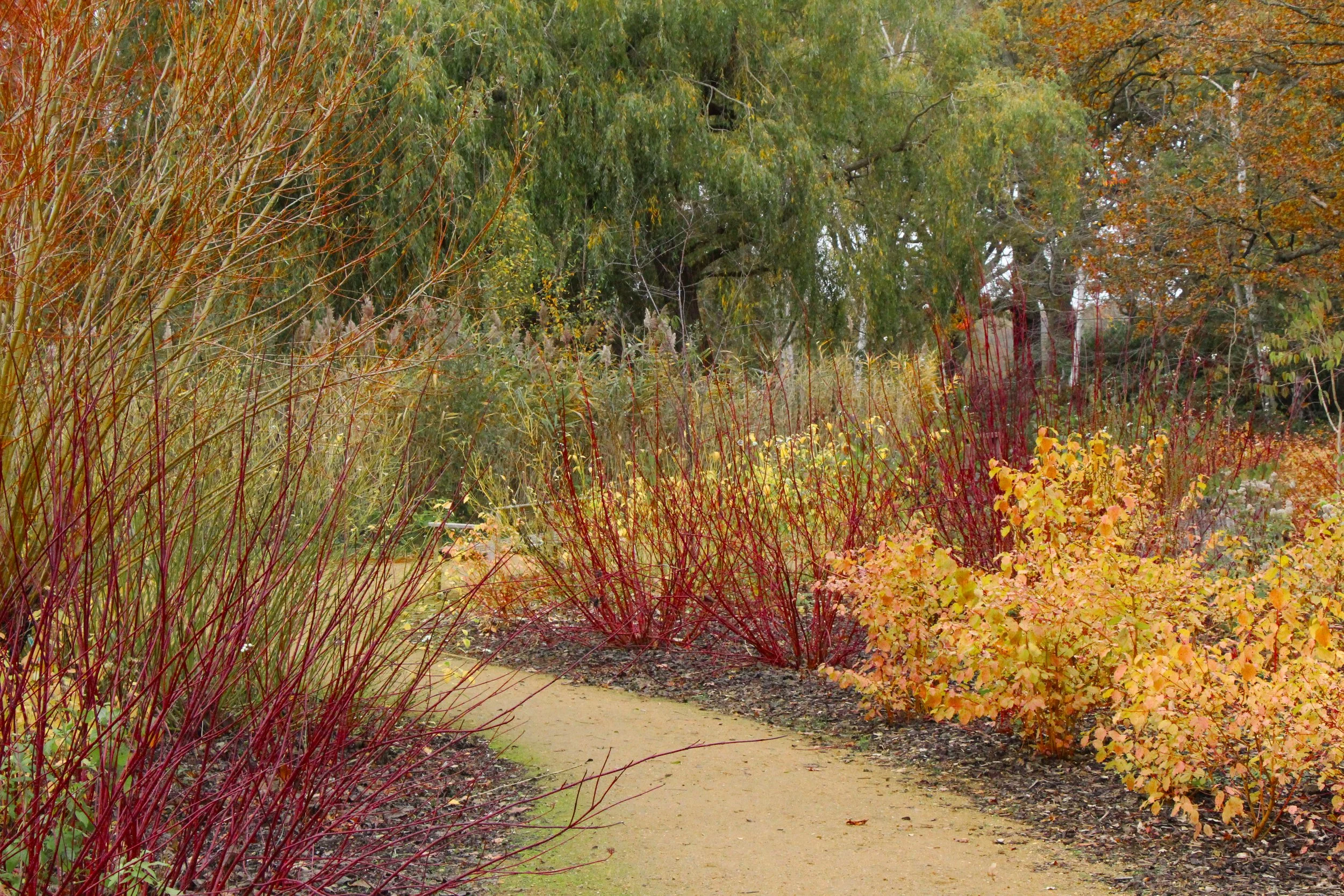
Cornus showing off red winter branches
Using plants for their vibrant coloured trunks, stems and branches is one of the most effective ways to introduce colour into a winter garden especially when sunlight is low and the palette is muted.
They work best when planted en masse or as a swathe, if your space permits, allowing the colour to read from a distance and glow against the stark winter palette
Excellent plants for coloured winter stems include:
Cornus alba ‘Sibirica’ – vivid red stems
Cornus sanguinea ‘Midwinter Fire’ – fiery oranges, yellows and reds
Cornus sericea ‘Flaviramea’ – striking yellow-green stems
Salix alba var. vitellina – golden willow stems
Rubus cockburnianus ‘Goldenvale’ – white, frosted-looking stems
These plants come into their own once the leaves have dropped, particularly when backlit by winter sun or powdered with frost.
Interesting Bark: Beauty Revealed When Leaves Fall
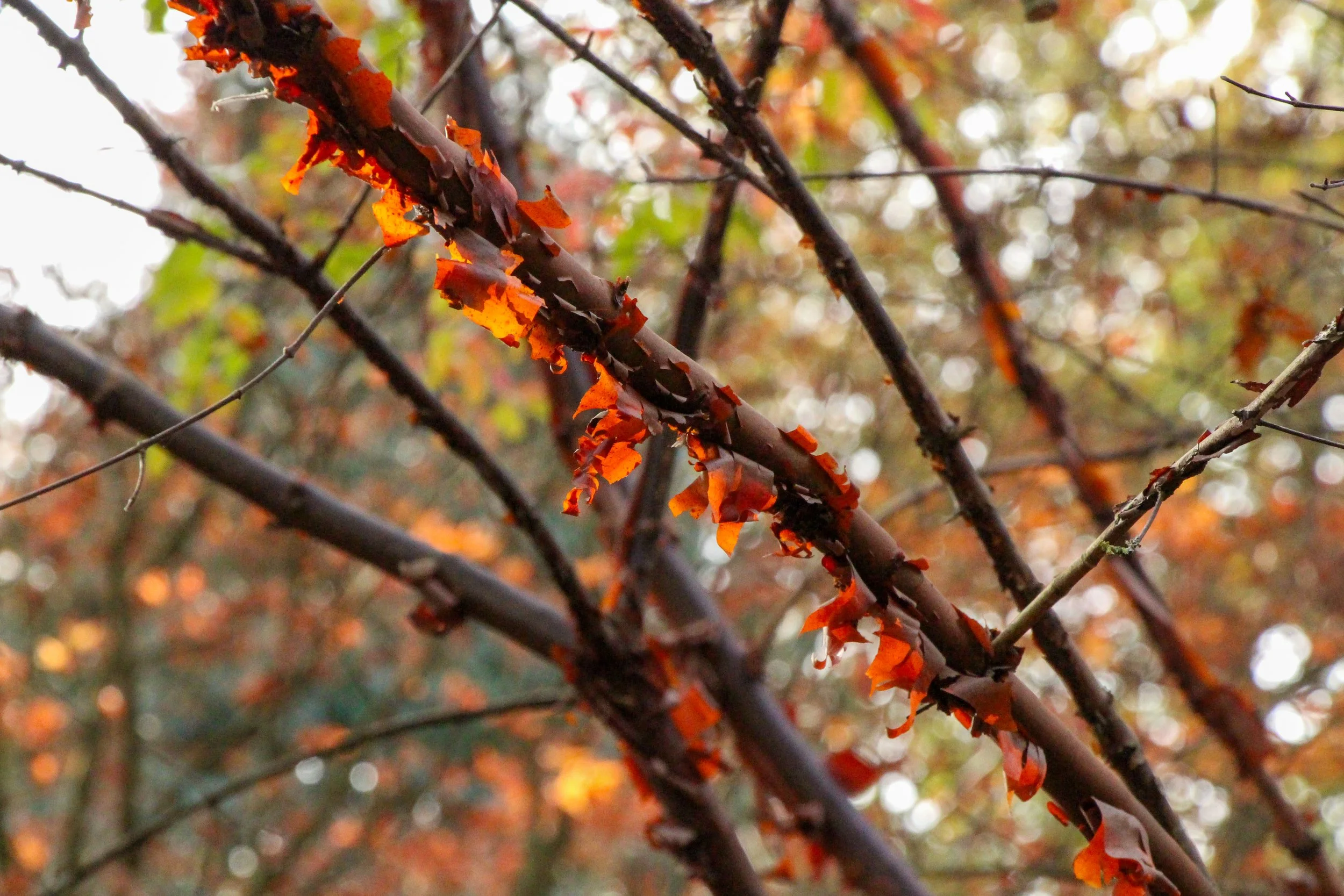
Acer griseum bark
Winter can be the season when trees show their true character. when their foliage has dropped their, becomes the main event offering colour, texture, and pattern that is often overlooked when designing a winter friendly garden.
Trees and shrubs with standout winter bark:
Acer griseum – peeling cinnamon-coloured bark
Betula pendula and Betula jacquemontii – white, reflective trunks
Prunus serrula – rich, glossy mahogany bark
Stewartia pseudocamellia – exfoliating bark with subtle mottling
Eucalyptus deglupta - rainbow bark
Planted where light can catch them, these trees add drama to the winter garden. Remember to think about the mature size and habit of a tree when selecting a tree for your garden.
Seed Heads and Grasses: Letting Plants Age Gracefully
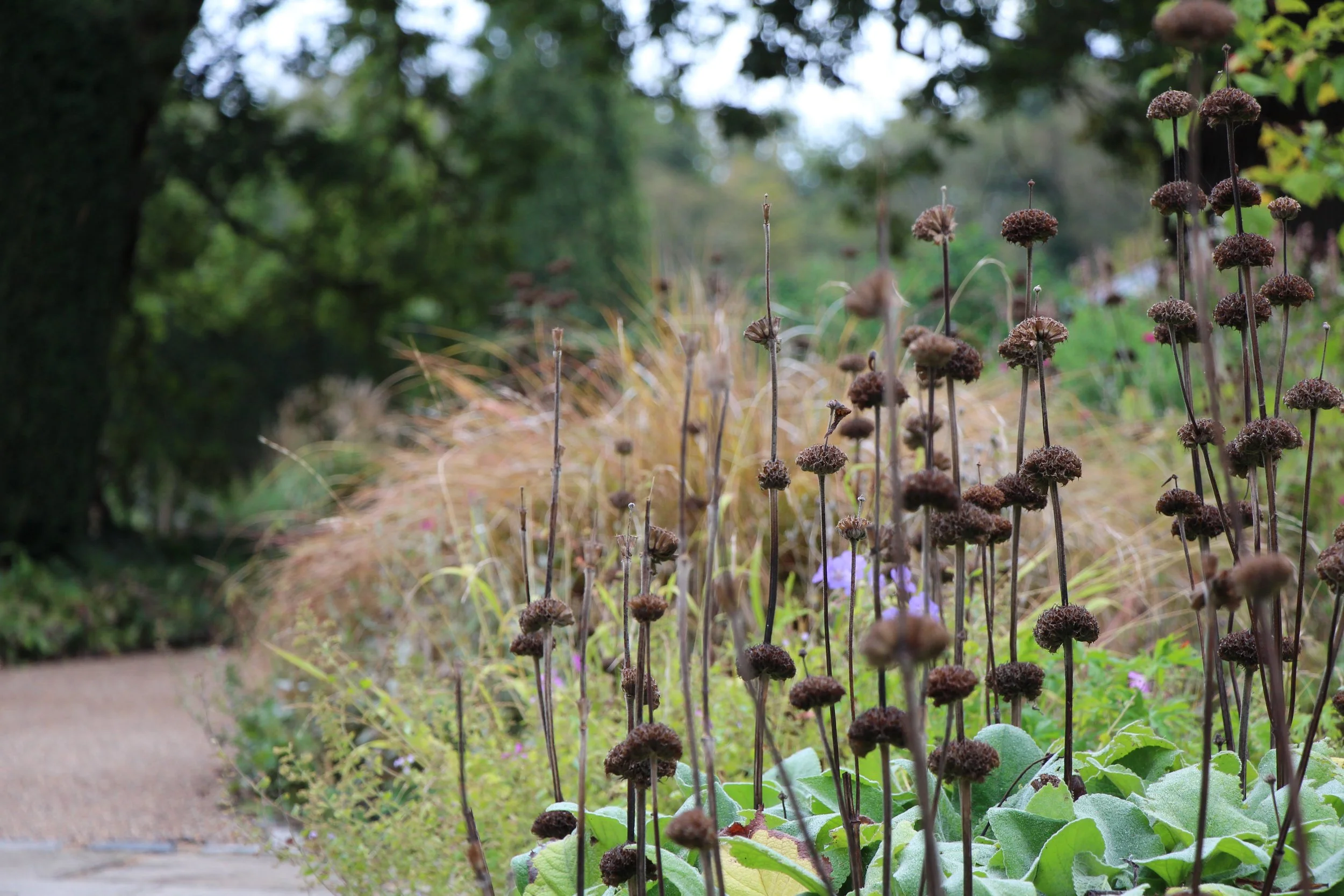
Phlomis seed heads holding winter structure
One of the simplest ways to enhance winter interest is also one of the hardest habits to break: DO NOTHING! Don’t cut everything back. Leave that job til very early spring.
Spent flower heads and silvering grasses bring texture, movement, and structure through winter, catching frost and light perfectly.
Plants worth leaving standing include:
Hydrangea – faded flower heads provide architectural form
Echinacea – bold seed heads that look stunning in frost
Phlomis – tiered seed heads with strong silhouette
Sedum (Hylotelephium) – structure and winter colour
Miscanthus, Calamagrostis, Molinia – grasses that hold their shape
Beyond aesthetics, leaving these plants to sit during the cooler season plays an important ecological role and supports biodiversity.
Leaving seed heads intact provides food for native birds during lean months and a roost or shelter for overwintering insects. They help the plants themselves by providing natural insulation for the plant’s crown. Leaving plants of any kind as they die back also insulates the soil protecting it over the cooler months and preventing any winter weeds from emerging.
Evergreen Shape: Holding the Garden Together
Evergreen shrubs are the anchors of the garden in all seasons but particularly winter . They provide continuity and structure, allowing seasonal features to shine without the space feeling empty. They also provide needed structure and form to a winter garden that to may feel a little messy while seedheads and grasses are left to sliver and fade.
Reliable evergreens for winter presence include:
Yew (Taxus baccata) – timeless, sculptural, and versatile
Box (Buxus sempervirens) – formal or informal structure
Holly (Ilex aquifolium) – glossy leaves and winter berries
Pittosporum tenuifolium – soft texture and movement
Sarcococca confusa – evergreen foliage with scented winter flowers
Daphne - evergreen shrub with intensely perfumed blooms
Camellia - A variety forms and blooms.
Slow-Growing conifer species - All shapes and hues of green.
Thoughtful evergreen planting ensures the garden still feels composed when herbaceous layers retreat and silver.
Planting for the Season: Flowers That Bloom in Winter
To prove that winter is not a time for your garden to sleep there are many species of plants the can provide beautiful winter blooms. Winter flowers are not about abundance. A single bloom in January stir-up the same amount of joy or excitement that an entire border can in June.
Reliable winter-flowering plants for UK gardens include:
Hellebores – long-flowering, elegant and tough
Galanthus (Snowdrops) – delicate but resilient
Hamamelis (Witch hazel) – spider-like flowers with fragrance
Lonicera fragrantissima – winter honeysuckle
Cyclamen coum – low-growing colour in shaded areas
Mahonia x media ‘Winter Sun’ - large yellow blooms
Erica carnea – dependable winter colour and pollinator-friendly
Daphne - evergreen shrub with intensely perfumed blooms
Camellia - A variety of bloom colours and sizes.
Acacia Species - Many different species flowering in winter with Yellow Blooms
These plants reward close observation, the very thing winter encourages.

Designing a Garden That Respects Winter
A garden designed with winter interest in mind feels intentional year-round. It doesn’t rely on summer spectacle alone, it pulls you throughout the year igniting small moments of joy in the darkest days.
Winter teaches us to slow down, to notice form and texture, and to appreciate the subtle details. When we design for that season, rather than ignore it, we create gardens that feel thoughtful and rooted in the natural rhythm of life.
And in my experience, those are the gardens that last.